

ETP Sludge Management: 7 Costly Mistakes to Avoid
ETP sludge management deserves attention before a storage tank fills or a collection vehicle arrives. An effluent treatment plant separates pollutants from industrial wastewater, but some of those pollutants remain in the sludge. That material still needs assessment, suitable handling and an accepted destination.
Quick answer: Identify and classify each sludge stream, confirm its receiving route, assess dewatering performance, provide suitable storage and retain collection records. Removing water from sludge can reduce handling costs, but it does not automatically make the remaining solids safe for unrestricted disposal.
For UAE factories, the practical challenge is connecting treatment performance with everyday operations: how much sludge is produced, how wet it is, where it can be stored and who can receive it. These seven mistakes can create unnecessary costs and interrupt an otherwise effective treatment process.
1. Assuming all ETP sludge has the same classification
Sludge from a food-processing plant can differ significantly from sludge produced by metal precipitation or oily wastewater treatment. Appearance alone cannot establish its classification or disposal route. A dry-looking cake may still contain substances that require controlled handling.
Start ETP sludge management with a description of the production process, treatment chemicals and sludge sources. Agree the required sampling and analysis with the responsible authority and intended receiving facility. Depending on the material, the assessment may include metals, organic contaminants or other relevant properties.
Keep this assessment separate from your treated-water report. Acceptable outlet water does not establish that the separated sludge is suitable for unrestricted disposal or reuse.
2. Mixing sludge streams without checking compatibility
Combining every residue in one tank may simplify pipework, but it can complicate treatment and disposal. Oily residues, biological sludge and metal-bearing chemical sludge may behave differently during pumping, conditioning and dewatering.
Before combining streams, assess chemical compatibility, the effect on classification and whether the receiving facility will accept the mixture. Use identifiable collection points so operators know which process generated each material.
For Dubai facilities, Law No. 18 of 2024 prohibits mixing hazardous wastes that do not share the same specifications and characteristics. It also prohibits placing hazardous waste in containers designated for non-hazardous waste.
3. Paying to transport avoidable water
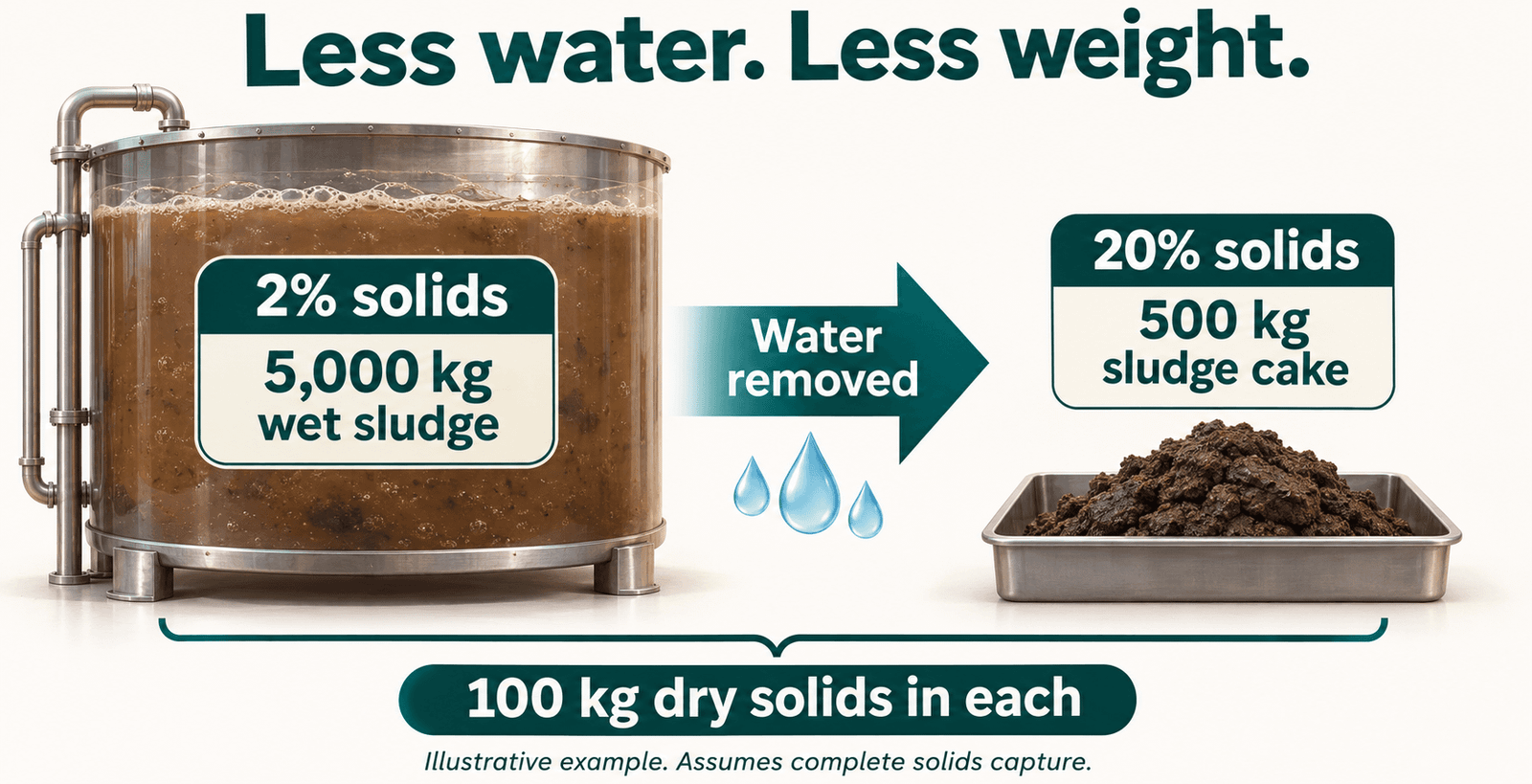
Moisture content directly affects the wet mass requiring handling. The US EPA explains that dewatering reduces residual volume and can lower subsequent storage, transfer and disposal costs. This is a general engineering principle, not a UAE disposal specification.
Consider an illustrative batch containing 100 kg of dry solids:
- At 2% total solids by mass, the wet sludge weighs 5,000 kg.
- At 20% total solids by mass, the cake weighs 500 kg.
- The difference is 4,500 kg of separated water, assuming complete solids capture.
This calculation does not guarantee a particular cake dryness or collection saving. Actual results depend on sludge characteristics, equipment and charging arrangements. Effective ETP sludge management compares total operating cost, including energy, chemicals, maintenance and management of the separated liquid.
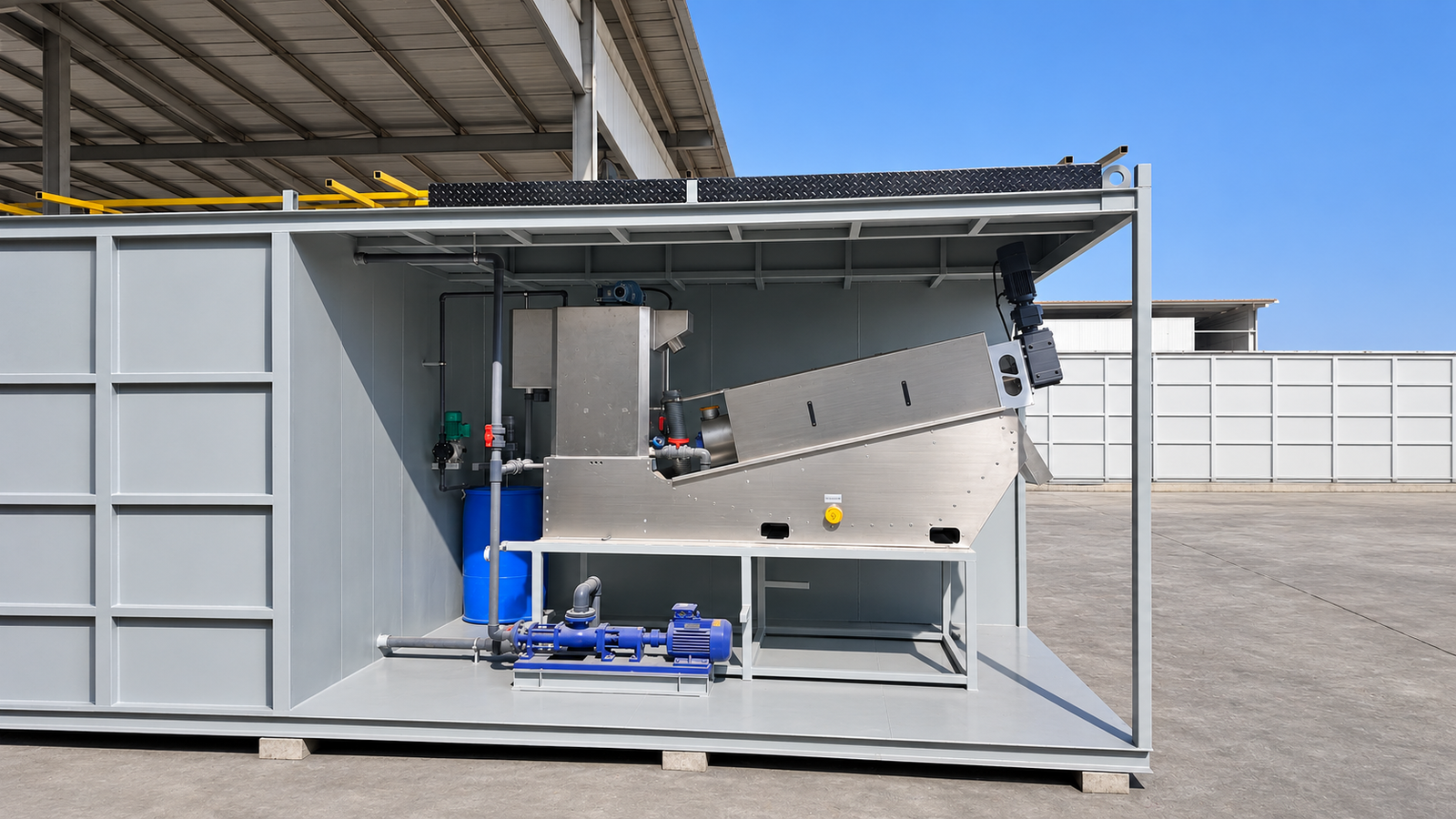
4. Selecting dewatering equipment without sludge trials
A machine that performs well on one factory’s sludge may perform differently on another’s. Feed solids, oil content, particle properties and chemical conditioning all influence the result.
Before committing to equipment, ask for representative sludge trials and clearly stated performance assumptions. Compare:
- Feed volume and dry-solids throughput.
- Cake solids concentration and solids capture.
- Conditioning chemical consumption.
- Operator attention, cleaning and maintenance needs.
- Performance when production conditions change.
Make these results part of your ETP sludge management design basis. A drier cake is useful, but poor solids capture can send material back into the liquid stream and undermine the apparent improvement.
5. Forgetting the liquid removed during dewatering
Dewatering produces two outputs: concentrated sludge and separated liquid. Depending on the equipment, that liquid is commonly called filtrate or centrate. It should not be assumed clean enough for direct discharge.
Assess its flow and relevant pollutant concentrations before deciding where it goes. If it returns to the ETP, include the additional hydraulic and pollutant loads in the process review. A short, concentrated return during a dewatering cycle can affect the plant differently from a steady flow.
Your industrial wastewater treatment system should therefore account for both the sludge line and its liquid returns. ETP sludge management works best when these are considered together.
6. Leaving storage and collection until the last minute
Storage should account for expected sludge production, collection frequency and a realistic allowance for delays, within the applicable permit conditions.
Select compatible containers and provide suitable containment, weather protection and access for inspection and loading. Identify each stored material clearly. Plan cleaning, spill response and worker protection around the actual sludge hazards.
In Dubai, hazardous-waste storage or treatment requires the relevant permit, and hazardous-waste containers must meet the applicable specifications and labelling requirements. Confirm the requirements for your location before finalising the arrangement.
Include collection delays and dewatering breakdowns in the ETP sludge management plan so operators have a defined response before storage capacity becomes critical.
7. Treating a collection invoice as complete traceability
A collection invoice records a transaction; it does not necessarily demonstrate that the correct material reached an authorised destination. Check the transporter’s current authorisation and confirm that the receiving facility accepts your specific sludge.
Dubai Municipality’s Waste Department provides resources covering approved hazardous-waste transporters and waste-processing facilities. Check current permit scope rather than relying only on a contractor’s general business description.
Maintain a linked record of sludge identification, analysis, collected quantity, collection date, transporter and receiving documentation. Dubai’s waste law requires waste registers to be retained for at least two years for non-hazardous waste and five years for hazardous waste.
Build ETP sludge management into your operating plan
Assign responsibility for sampling, storage inspections, dewatering checks, collection bookings and document control. Track wet sludge quantity alongside solids concentration so changes in moisture are not mistaken for changes in dry-solids production.
Review the plan whenever raw materials, treatment chemicals or production volumes change. Requirements depend on the jurisdiction, classification and receiving facility; Dubai-specific provisions should not be treated as universal UAE rules.
For a new plant or an upgrade, share your sludge analysis, operating records and proposed disposal route with Almasa Environmental Solutions through its industrial wastewater treatment enquiry. This gives the engineering review a clearer basis for integrating sludge handling with the wider treatment system.