

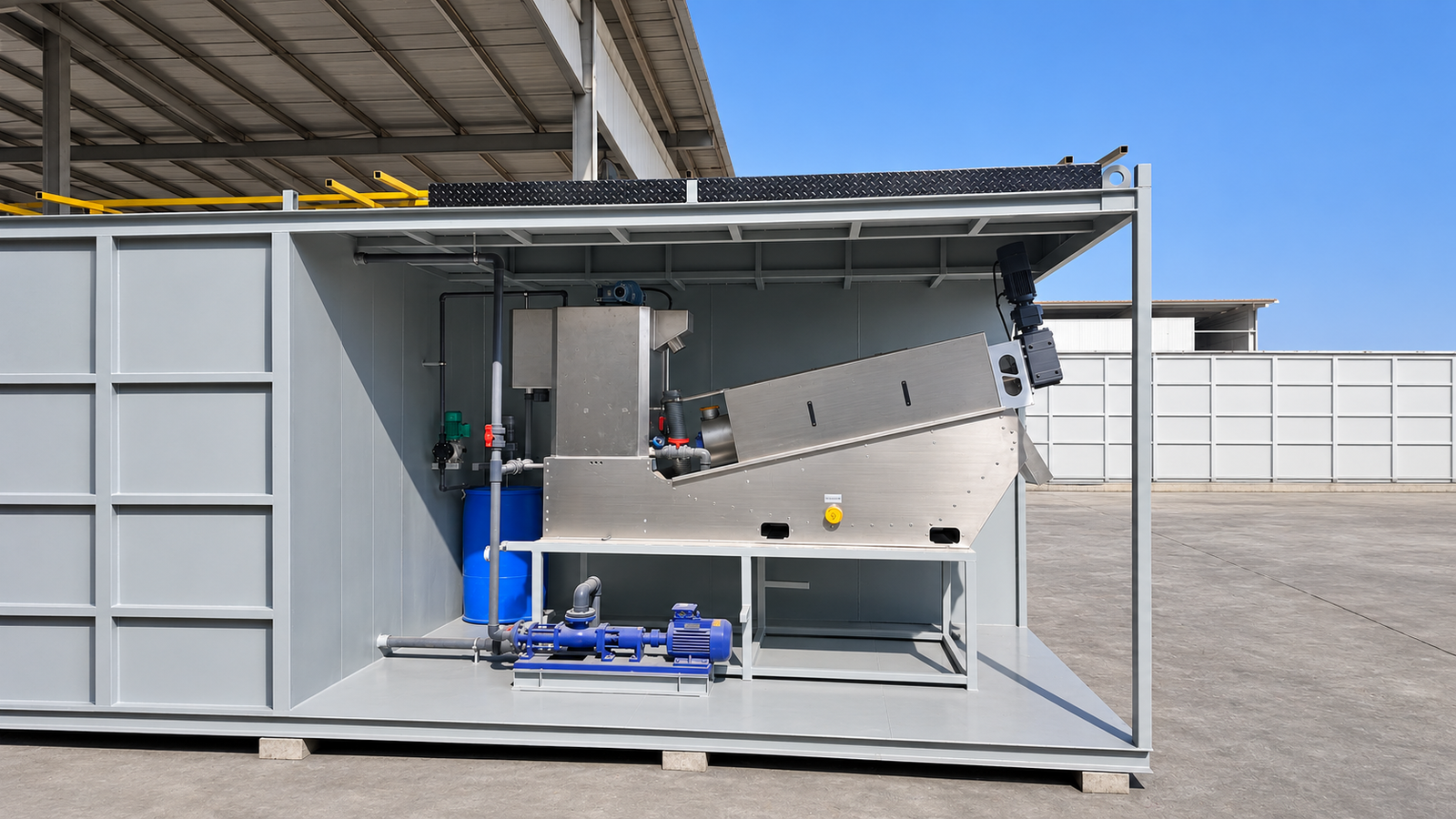
Wastewater Equalization Tank: 7 Costly Design Mistakes to Avoid
A wastewater equalization tank helps a treatment plant handle changes in incoming flow and wastewater strength. For a factory that releases most of its wastewater during one shift, this tank can be essential to feeding the treatment process steadily throughout the day.
Quick answer: Size equalisation storage from the pattern of incoming wastewater and the planned outgoing treatment flow. Then check usable volume, mixing, stream compatibility, pump controls and contingency arrangements. Daily volume alone gives an incomplete design basis.
For UAE industrial facilities, the following seven checks help turn a tank specification into an operating arrangement that suits the production schedule.
1. Sizing the wastewater equalization tank from daily flow alone
Two factories can each generate 120 cubic metres per day while requiring very different storage. One may release wastewater continuously. The other may discharge everything during an eight-hour production shift.
The EPA process design manual describes determining equalisation volume from the flow pattern or the loading pattern of a particular constituent. Record flow over representative production and cleaning cycles, including short releases that an hourly average could conceal.
Plot cumulative inflow against the proposed cumulative outflow. The range of the cumulative difference identifies the balancing storage needed for that operating scenario.
2. Overlooking production shifts and batch releases
Consider a simplified wastewater equalization tank example. A factory discharges 120 m³ evenly over eight hours, while its ETP processes that volume evenly over 24 hours. Assume the cycle repeats daily and there are no additional flows.
| Item | Calculation | Result |
|---|---|---|
| Inflow during production | 120 ÷ 8 | 15 m³/hour |
| Continuous treatment feed | 120 ÷ 24 | 5 m³/hour |
| Storage increase over the shift | (15 − 5) × 8 | 80 m³ |
| Drawdown during the next 16 hours | 5 × 16 | 80 m³ |
The calculated working storage swing is 80 m³. Total constructed capacity also needs to accommodate the minimum operating volume, freeboard and project-specific allowances.
Now add a cleaning discharge after production ends. Both the daily volume and the timing change, so the calculation must be repeated. Include weekend operation, planned shutdowns and any treatment downtime when establishing the actual wastewater equalization tank duty.
3. Confusing total tank volume with usable storage
A tank’s external dimensions or nominal capacity can overstate the volume available for balancing. Pumps and mixers may require a minimum liquid level, and the space above the maximum operating level provides freeboard.
Ask the designer to mark minimum operating level, normal maximum level and alarm levels on the drawing. Specify the volume between the working limits. Equipment displacement and accumulated deposits can also affect the available space.
Provide access for inspection and removal of settled material. A wastewater equalization tank that gradually loses working volume can overflow under a production pattern it previously handled.
4. Providing inadequate mixing
Flow storage and blending require attention to tank shape, inlet location and mixing coverage. Poorly mixed corners can collect solids, while an inlet close to the outlet may allow incoming wastewater to pass through with limited blending.
EPA guidance for the organic chemical industry identifies both flow variation and wastewater characteristics as equalisation design considerations. Its assessment checks include mixing and solids accumulation. See the industrial equalisation guidance.
Select mixing equipment for the wastewater and the range of operating depths. Where aeration is proposed, assess oxygen needs, foaming and potential emissions. Confirm that equipment remains effective as the wastewater equalization tank fills and empties.
5. Pumping wastewater forward too quickly
Storage provides little protection if the transfer pump immediately sends the accumulated water downstream in a large surge. Specify the feed rate that the receiving process can accept, together with a suitable control method.
The EPA preliminary treatment presentation illustrates equalisation arrangements using controlled-flow pumps, flow measurement and controls. These components connect the stored volume to the treatment process.
Check the actual pump duty against the required flow range. A pump’s maximum capacity alone says little about how steadily it can feed the plant. Record both flow and tank level during commissioning to verify that the controls deliver the intended daily cycle.
6. Combining incompatible wastewater streams
Before connecting drains to a common tank, identify their contents and assess compatibility. Production chemicals, concentrated cleaning solutions and specialist process residues may require separate collection or pretreatment.
A larger wastewater equalization tank cannot resolve every problem caused by unsuitable incoming material. Review chemical information and representative wastewater results before agreeing which streams the ETP will accept. EPA technical guidance discusses compatibility assessment for materials entering waste storage and treatment tanks.
Also assess pollutant mass. Blending can spread a concentrated release over time, but the receiving process still needs capacity for the accepted daily load. Include flow and concentration data in the design review.
7. Missing level controls and overflow planning
Define what happens when a transfer pump fails, power is interrupted or production releases an unexpected batch. The operating plan should identify alarm recipients, response times and the available actions before the tank reaches its maximum level.
Depending on the site, measures may include standby pumping, separate emergency storage or stopping the contributing process. Account for the time needed to act when selecting alarm levels.
Confirm the containment and drainage arrangement against the site’s approved requirements. Test high-level alarms, low-level protection and pump changeover during commissioning, and include these checks in routine maintenance.
Prepare a clear wastewater equalization tank design brief
Bring together measured flow profiles, production schedules, cleaning releases, wastewater analysis, downstream operating hours and existing tank drawings. Identify future production changes and the space available for maintenance.
Almasa Environmental Solutions assesses wastewater characteristics, hydraulic load and site conditions when developing industrial wastewater treatment solutions. Sharing these records gives the engineering team a practical basis for reviewing equalisation alongside the rest of your ETP.
Is all ETP sludge hazardous?
No. Classification depends on the sludge’s properties and the applicable rules. Review the production process, treatment chemicals and required laboratory results with the responsible authority and receiving facility.
Does dewatering make sludge safe for disposal?
Dewatering removes water and reduces wet mass. It does not automatically remove contaminants, change the waste classification or establish that a facility can accept the sludge.
How often should ETP sludge be collected?
Base collection frequency on sludge generation, available storage, material characteristics and permit conditions. Include an allowance for collection delays without exceeding permitted storage arrangements.
Can ETP sludge be used as fertiliser?
Do not assume industrial sludge is suitable for agricultural use. Any proposed reuse needs appropriate characterisation, treatment where necessary and acceptance under the applicable regulatory requirements.
Why choose Almasa Environmental Solutions for your wastewater treatment?
Almasa Environmental Solutions provides complete wastewater treatment solutions specifically designed for labour accommodation facilities across the UAE and GCC. Our advantages include advanced MBR technology, locally manufactured systems, customized engineering, fast delivery, responsive after-sales support, and over 600 successful water and wastewater treatment projects. We are committed to delivering reliable, sustainable, and cost-effective solutions that help clients reduce operating costs while achieving environmental compliance.
Contact Almasa Environmental Solutions with your wastewater information to discuss the assessment and testing evidence needed before selecting a treatment concept.