

Industrial STP Cost in UAE: Key Factors That Affect Wastewater Treatment Plant Investment
As industries, construction projects, and labour accommodations continue to expand across the UAE, the need for reliable wastewater treatment systems has become essential.
Many project developers, consultants, and facility managers ask an important question:
“What determines the cost of an industrial Sewage Treatment Plant (STP) in the UAE?”
While every project is different, the overall investment depends on several engineering, operational, and regulatory factors. Understanding these elements helps businesses choose the right wastewater treatment solution without compromising performance or compliance.
This guide explains the main factors influencing industrial STP cost in UAE, helping organizations plan wastewater treatment systems more effectively.
Why Wastewater Treatment Is Mandatory in UAE
Environmental regulations across the UAE require wastewater to be treated before discharge or reuse. Industrial facilities, construction projects, and labour camps must ensure that wastewater meets environmental standards to protect public health and natural resources.
Without a properly designed treatment system, organizations may face:
Regulatory penalties
Project delays or shutdowns
Environmental violations
Increased operational costs
A well-engineered wastewater treatment plant ensures reliable performance while supporting sustainability goals.
Major Factors That Affect Industrial STP in Cost
Instead of a fixed price, wastewater treatment plants are typically custom-designed based on project requirements.
Below are the key factors that influence the overall investment.
1. Treatment Capacity
The size of the wastewater treatment plant is one of the most significant cost factors.
Capacity is usually measured in cubic meters per day (m³/day).
Examples include:
Small labour camps
Construction site accommodations
Industrial production facilities
Commercial developments
Larger systems require additional equipment such as pumps, blowers, tanks, and automation systems, which increases the overall investment.
Accurate capacity estimation is essential to avoid under-design or unnecessary oversizing.
2. Wastewater Characteristics
The quality of wastewater generated by a facility significantly impacts system design.
Typical wastewater parameters include:
Biological Oxygen Demand (BOD)
Chemical Oxygen Demand (COD)
Total Suspended Solids (TSS)
Oil and grease levels
pH and chemical composition
Industrial wastewater with higher contaminant levels requires more advanced treatment processes, which can influence plant complexity and cost.
3. Technology Selection
Two of the most commonly used sewage treatment technologies in the UAE include:
Conventional Activated Sludge Systems
These systems rely on biological treatment followed by settling tanks to separate treated water from sludge.
Advantages include simplicity and lower initial investment.
However, they require larger space and additional filtration for higher effluent quality.
Membrane Bioreactor (MBR) Systems
MBR technology combines biological treatment with membrane filtration.
Benefits include:
Compact plant design
Superior effluent quality
High compliance reliability
Reduced sludge production
MBR systems are widely used in modern developments due to their performance and space efficiency.
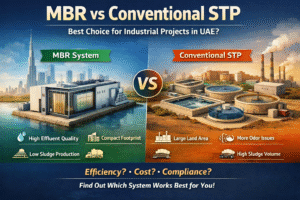
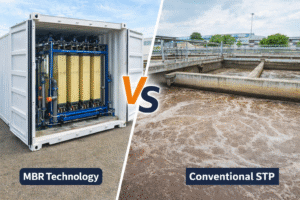
For a full comparison, see our guide on MBR vs Conventional STP for Industrial Projects.
4. Installation Method
Wastewater treatment plants can be installed using two main approaches.
Civil-Built Plants
These systems are constructed on-site with concrete tanks and permanent infrastructure.
They are suitable for long-term industrial facilities.
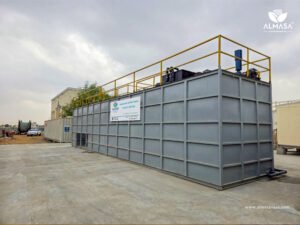
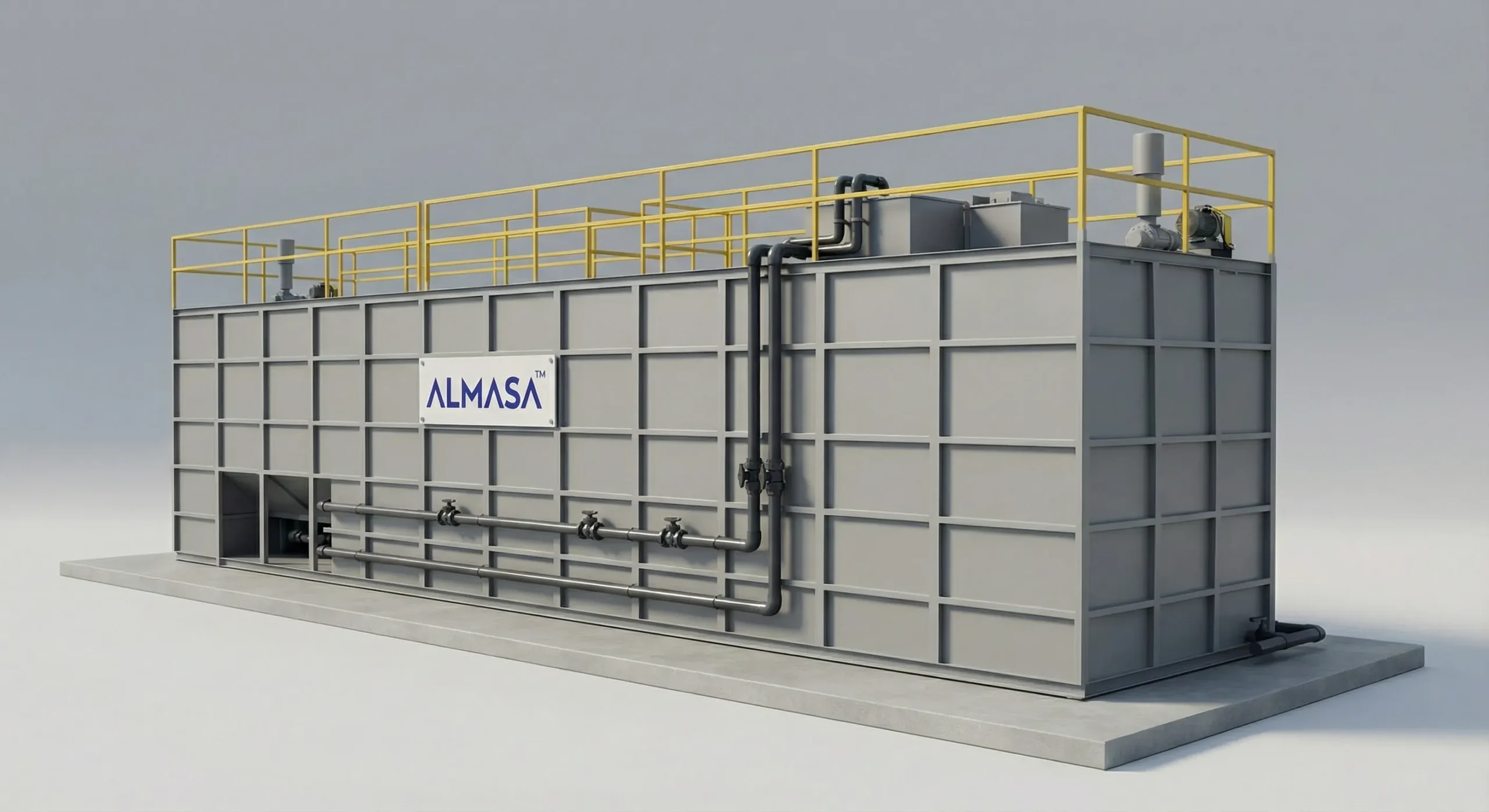
Containerized or Modular Systems
These plants are pre-engineered and assembled in factory-built modules.
Advantages include:
Faster installation
Reduced civil work
Easy relocation for temporary sites
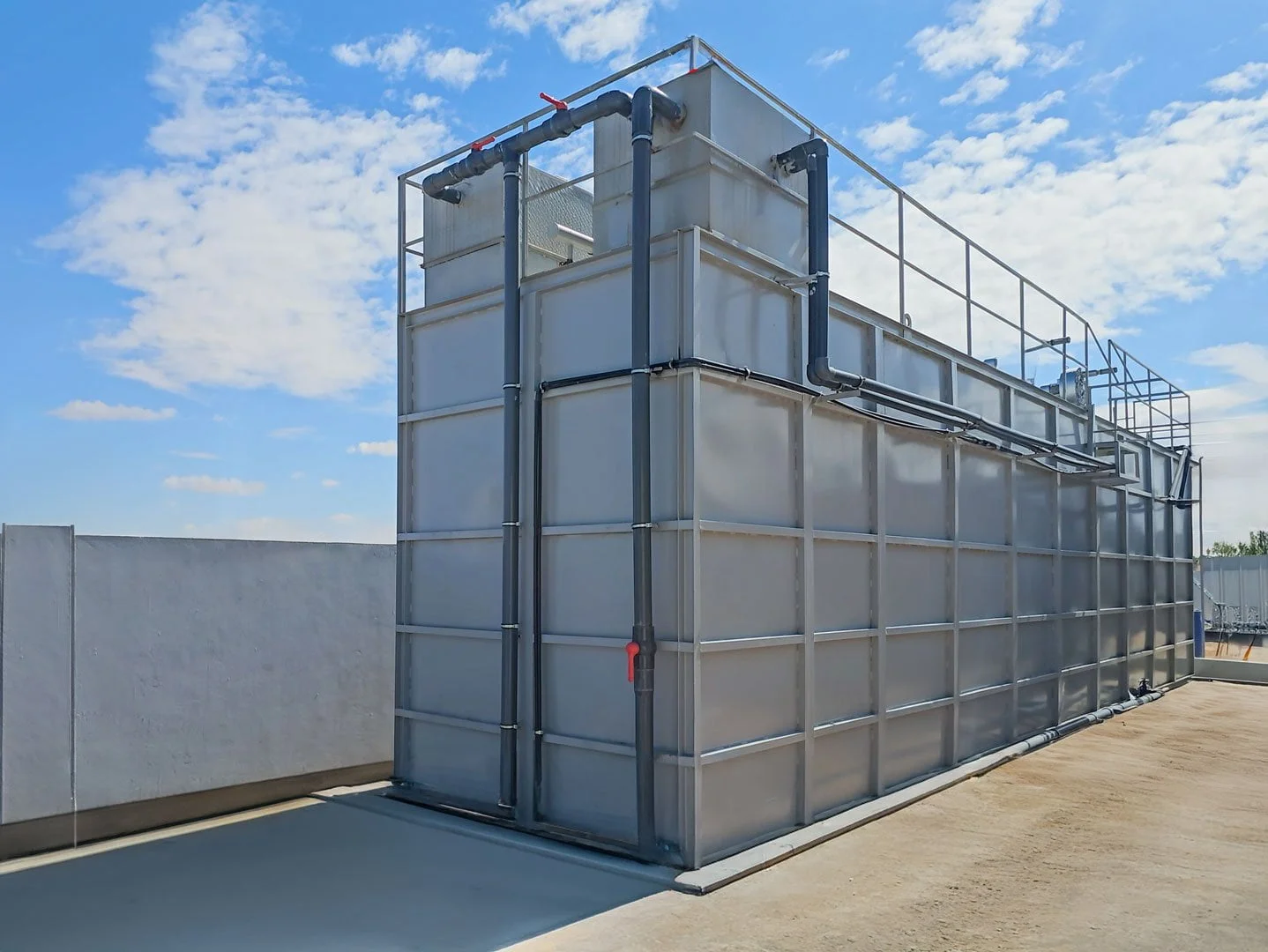
Containerized plants are particularly useful for construction sites and labour camps.
Learn more in our article on Wastewater Treatment for Construction & Labour Camps in UAE.
5. Automation and Control Systems
Modern wastewater treatment plants often incorporate automation to improve reliability and efficiency.
Automation may include:
PLC-based control panels
SCADA monitoring systems
Automated aeration control
Remote monitoring capabilities
While automation increases initial investment, it significantly reduces operational errors and improves long-term efficiency.
6. Water Reuse Requirements
Many facilities in the UAE aim to reuse treated wastewater for purposes such as:
Landscape irrigation
Dust suppression
Cooling systems
Toilet flushing
Water reuse systems may require additional filtration and disinfection processes, which influence overall system design.
However, reuse systems can significantly reduce freshwater consumption and operational costs over time.
7. Site Conditions and Infrastructure
Each project location has unique requirements that influence installation complexity.
Factors include:
Available space
Soil conditions
Electrical supply
Pipeline connections
Drainage infrastructure
These elements are evaluated during engineering design to ensure efficient installation and operation.
Operational Considerations
When planning a wastewater treatment system, it is important to evaluate operational requirements alongside initial investment.
Operational factors include:
Energy consumption
Sludge handling
Chemical dosing
Equipment maintenance
Monitoring and compliance testing
A well-designed system balances capital investment with long-term operational efficiency.
Importance of Proper Engineering Design
Poorly designed wastewater treatment plants can result in:
Frequent system failures
Odor problems
High maintenance costs
Difficulty meeting discharge standards
Professional engineering ensures that treatment processes are optimized for wastewater characteristics and site conditions.
This reduces long-term operational challenges and ensures reliable system performance.
Selecting the Right Wastewater Treatment Partner
Choosing an experienced wastewater treatment company is critical for project success.
Important factors include:
Proven engineering expertise
Technology capabilities
Local manufacturing advantage
Fast service response
Availability of spare parts
Working with a reliable supplier ensures smooth project execution and long-term support.