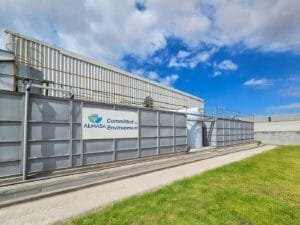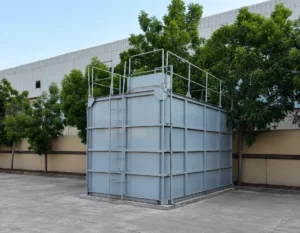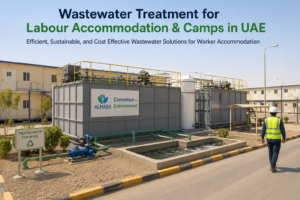


Wastewater Treatment for Construction & Labour Camps in UAE
The UAE’s rapid growth in infrastructure, real estate, oil & gas, and industrial projects has led to a surge in temporary construction sites and labour accommodation camps across the country.
With this expansion comes a major responsibility: proper wastewater management.
Whether it’s a remote desert construction project or a large labour camp housing hundreds of workers, untreated wastewater is not only an environmental hazard but also a serious legal risk.
This guide explains everything you need to know about wastewater treatment for construction and labour camps in the UAE including regulations, system options, technology comparisons, and how to choose the right solution.
Why Wastewater Treatment Is Critical for Construction & Labour Camps
Construction sites and labour camps generate significant wastewater daily from:
Toilets and bathrooms
Kitchen and dining areas
Laundry facilities
Cleaning operations
Without a proper Sewage Treatment Plant (STP), this wastewater can:
Cause foul odors
Contaminate soil and groundwater
Attract pests
Lead to heavy environmental fines
Result in project shutdowns
In the UAE, environmental compliance is strict. Authorities require proper treatment before discharge or reuse.
This makes installing the right construction site STP in UAE not optional but essential.
UAE Regulations for Labour Camp Wastewater
Labour accommodations must comply with local environmental authorities and municipal discharge standards.
Treated water must meet:
BOD limits
COD limits
TSS standards
pH compliance
Odor control requirements
Failure to comply can lead to:
Financial penalties
Site closure notices
Legal action
Damage to company reputation
Choosing the correct labour camp wastewater treatment system in UAE ensures smooth project continuity.
Common Wastewater Challenges at Construction Sites
Temporary and remote projects face unique difficulties:
1. Limited Space
Urban construction sites often lack space for large conventional systems.
2. Temporary Setup
Many sites operate only for 6–24 months.
3. Variable Flow Rates
Worker count fluctuates, changing daily wastewater volume.
4. Remote Locations
Desert projects may lack sewage network access.
5. Odor Complaints
Nearby residential zones demand strict odor control.
Because of these factors, traditional solutions may not always be ideal.
Best Wastewater Treatment Solutions for Construction & Labour Camps
There are typically two main options:
Conventional STP Systems
Conventional treatment systems use:
Aeration tanks
Clarifiers
Sludge return systems
Advantages:
Lower initial investment
Suitable for larger permanent camps
Limitations:
Requires larger footprint
May produce odor
Effluent quality moderate
Higher sludge production
MBR (Membrane Bioreactor) Systems
MBR combines biological treatment with membrane filtration.
Advantages:
Compact footprint
Superior treated water quality
Virtually odor-free operation
Ideal for reuse applications
High compliance reliability
Limitations:
Slightly higher initial cost
Requires technical expertise
For most construction and labour camp projects in UAE, MBR STP systems are becoming the preferred choice due to space efficiency and discharge standards.
If you want a detailed comparison, read our guide on MBR vs Conventional STP for Industrial Projects.
Portable & Containerized STP for Construction Sites
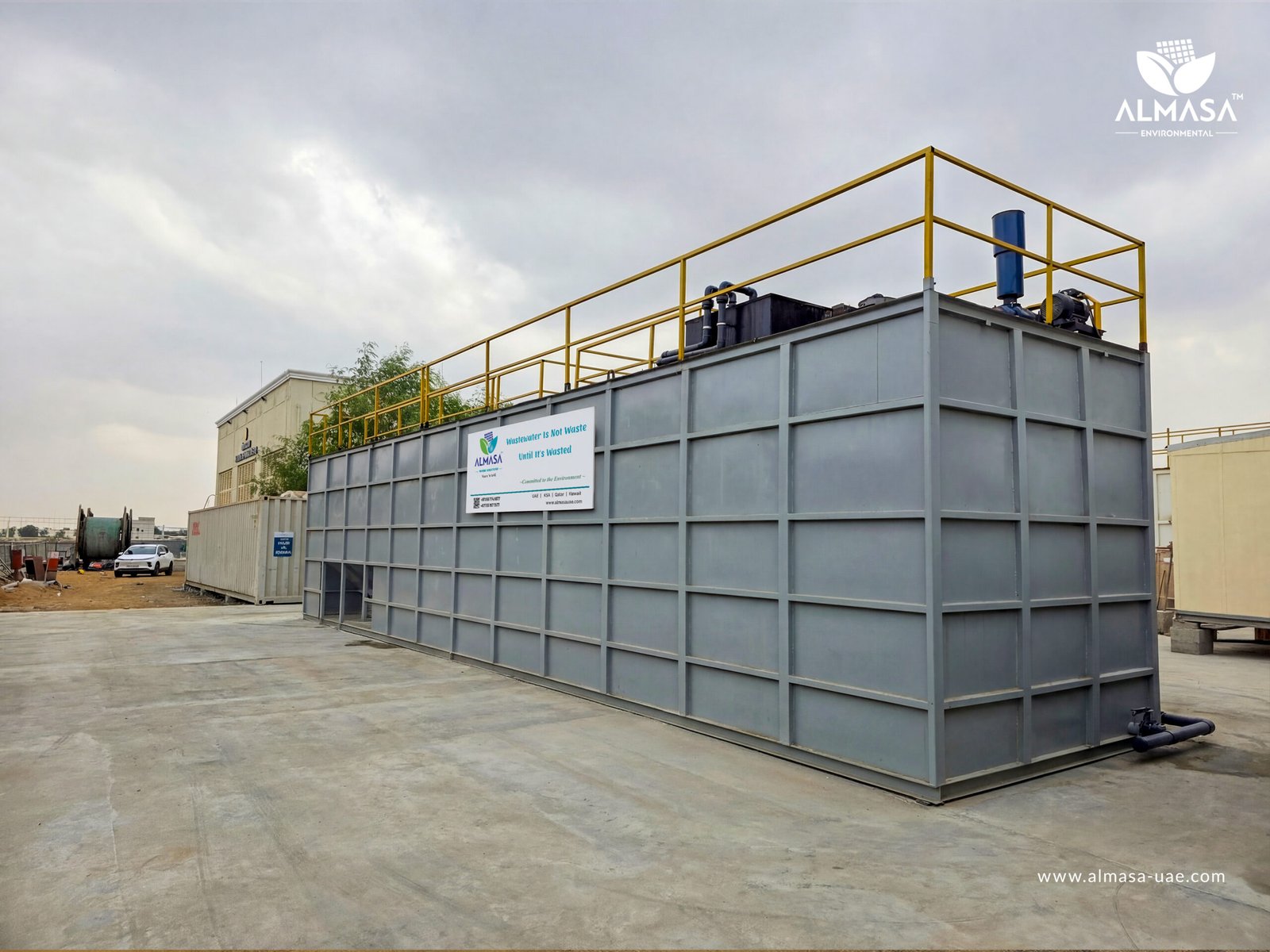
One of the most effective solutions today is a containerized or portable STP system.
These systems:
Are factory-built
Delivered ready-to-install
Require minimal civil work
Can be relocated after project completion
Offer plug-and-play commissioning
For temporary construction projects, a portable STP UAE solution reduces long-term capital risk while ensuring compliance.
Capacity Planning: How to Size a Labour Camp STP
Proper sizing depends on:
Number of workers
Daily water usage per person
Kitchen and laundry load
Future expansion plan
Typical water usage per person in labour camps ranges from 120–180 liters per day.
Example:
200 workers × 150 L/day = 30 m³/day STP requirement.
Incorrect sizing can cause:
System overload
Poor effluent quality
Increased maintenance
Compliance violations
Professional engineering assessment is essential before system selection.
Can Treated Water Be Reused?
Yes and this is a major cost-saving opportunity.
Treated wastewater can be reused for:
Landscaping irrigation
Road dust suppression
Toilet flushing
Construction curing
This reduces:
Freshwater consumption
Municipality water bills
Environmental footprint
High-quality MBR systems make safe water reuse possible.
Cost Considerations for Construction & Labour Camp STPs
The cost depends on:
Capacity (m³/day)
Technology (MBR vs Conventional)
Automation level
Containerized vs civil-built
Reuse requirements
While conventional systems may appear cheaper initially, MBR systems often reduce:
Operational costs
Sludge disposal expenses
Risk of non-compliance
For a full pricing breakdown, read: How Much Does an Industrial STP Cost in UAE?
How to Choose the Right Supplier in UAE
When selecting a wastewater treatment company, evaluate:
Proven local experience
Technology capability
Membrane expertise
Local manufacturing advantage
After-sales service availability
Response time
Spare parts accessibility
Fast service response is especially critical for remote construction sites.
Why Proper Engineering Matters
A poorly designed STP can cause:
Odor issues
Frequent breakdowns
Membrane fouling
High chemical consumption
Regulatory penalties
An optimized system ensures:
Stable biological treatment
Efficient aeration
Low sludge production
Long membrane life
Reduced operational cost
This is why engineering quality is more important than just price.