

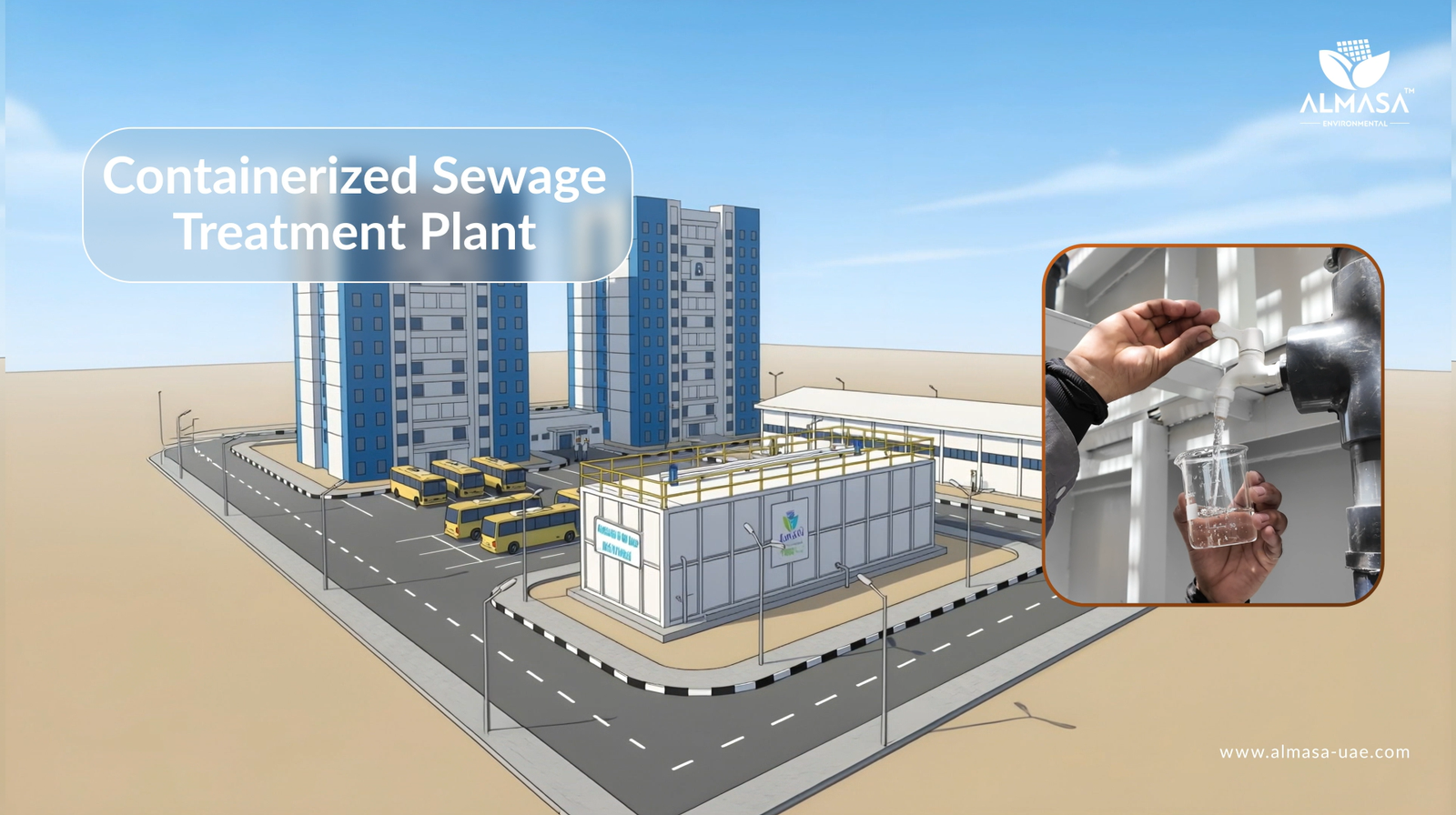
Why Labour Camps in UAE Are Switching to Onsite Sewage Treatment Plants
Across the UAE, labour camps and accommodation facilities are under increasing pressure to manage wastewater efficiently, reduce operating costs, and comply with environmental regulations.
For many camp operators, the traditional method of depending on sewage tankers has become extremely expensive and operationally inefficient.
This is why more businesses are now investing in labour camp sewage treatment UAE solutions such as onsite Sewage Treatment Plants (STP) and Greywater Treatment Systems.
These systems not only reduce recurring tanker expenses but also provide long-term sustainability, water reuse opportunities, and operational reliability.
The Hidden Cost of Tanker-Based Sewage Disposal
Many labour accommodations continue to rely on daily sewage tanker visits to remove wastewater from septic tanks and holding pits.
At first glance, this may seem simple.
However, the yearly operational cost becomes enormous.
Example: Real Cost for a 400-Person Labour Camp
A labour accommodation facility housing approximately 400 people generates nearly:
- 80,000 liters of sewage daily
To manage this wastewater using tanker disposal:
- 2 sewage tankers are required every day
- Each tanker capacity: 10,000 USG
- Cost per tanker trip: 300 AED
Cost Breakdown
| Category | Logistics / Calculation | Total Cost |
|---|---|---|
| Per Tanker Trip | 10,000 USG Trip | 300 AED |
| Daily Requirement | 2 Tanker Trips | 600 AED |
| Monthly Total | 600 × 30 Days | 18,000 AED |
| Yearly Total | 600 × 365 Days | 219,000 AED |
Annual Tanker Cost Exceeds AED 219,000
This means a single labour camp can spend nearly a quarter million dirhams every year simply on sewage removal.
And this cost continues indefinitely.
In addition to financial burden, tanker dependency creates:
- Operational delays
- Odor problems
- Environmental risks
- Increased traffic movement
- Overflow emergencies
Why Onsite STP Systems Are a Better Investment
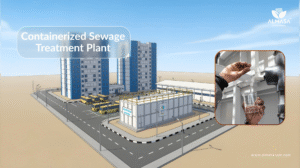
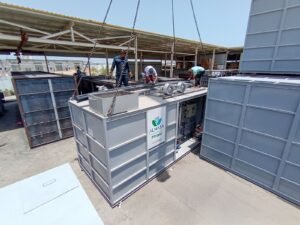
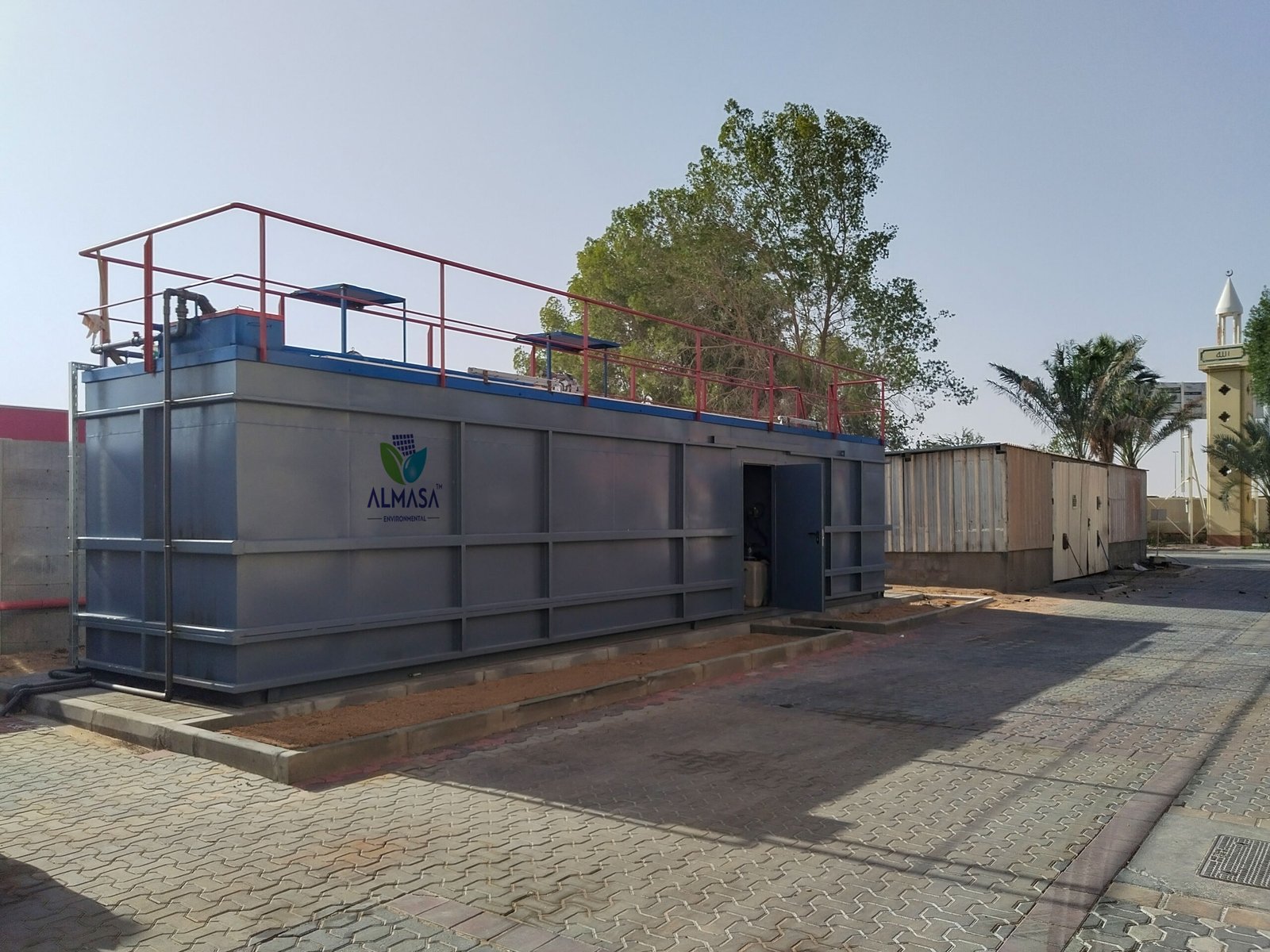
Instead of continuously paying tanker costs, labour camps can install an onsite Sewage Treatment Plant (STP) designed specifically for their accommodation capacity.
An onsite STP treats wastewater directly within the facility.
This provides:
- Major cost savings
- Reduced tanker dependency
- Water reuse opportunities
- Improved environmental compliance
Most importantly, the system becomes a long-term operational asset rather than an ongoing expense.
What Is a Labour Camp STP?
A labour camp STP is a wastewater treatment system designed to process sewage generated from:
- Toilets
- Showers
- Kitchens
- Laundry facilities
The treated water can then be reused for:
- Irrigation
- Landscaping
- Dust suppression
- Toilet flushing
This dramatically reduces freshwater consumption and sewage disposal costs.
Why MBR Technology Is Ideal for Labour Camps
Modern labour camp sewage treatment UAE projects increasingly use Membrane Bioreactor (MBR) technology due to its superior performance.
Compared to conventional systems, MBR offers:
- Better treated water quality
- Compact footprint
- Reduced odor generation
- Stable biological treatment
- Lower sludge production
This makes it highly suitable for camps with:
- Limited space
- High occupancy fluctuations
- Strict compliance requirements
How Greywater Treatment Further Reduces Costs
In many accommodation facilities, a large portion of wastewater comes from:
- Showers
- Wash basins
- Laundry systems
This is called greywater.
Instead of discharging it, Greywater Treatment Systems allow facilities to:
- Recycle usable water
- Reduce freshwater consumption
- Lower utility costs
Combined with STP systems, greywater treatment creates a highly efficient water management solution.
Major Benefits of Onsite Wastewater Treatment for Labour Camps
1. Massive Long-Term Cost Savings
Eliminating tanker dependency can save hundreds of thousands of dirhams over time.
2. Reduced Operational Risks
No more:
- Overflow emergencies
- Delayed tanker schedules
- Unexpected disposal disruptions
3. Better Environmental Compliance
Modern wastewater treatment systems help camps comply with UAE environmental regulations.
4. Water Reuse Opportunities
Treated water can be reused for non-potable applications, reducing freshwater demand.
5. Improved Camp Hygiene & Living Conditions
Proper wastewater management improves:
- cleanliness
- odor control
- overall environmental conditions
Why Many Labour Camps Still Face Wastewater Problems
Unfortunately, many camps continue facing operational issues because they rely on:
- undersized septic systems
- temporary wastewater solutions
- poorly maintained treatment units
This often results in:
- odor complaints
- environmental violations
- excessive tanker costs
- unstable wastewater handling
A professionally engineered STP eliminates these long-term issues.
Why Local Manufacturing Matters in UAE
One of the biggest challenges in wastewater treatment is delayed service and spare parts.
Locally manufactured systems provide major advantages:
- Faster delivery
- Faster maintenance response
- Easier customization
- Better adaptation to GCC climate conditions
This ensures reliable long-term plant operation.
The Importance of Fast Technical Support
Wastewater systems operate every day without interruption.
When problems occur, fast technical response is critical.
Reliable wastewater partners should provide:
- quick troubleshooting
- preventive maintenance
- operator support
- spare parts availability
This minimizes downtime and operational risk.
Sustainable Water Management Is the Future
As UAE sustainability regulations continue evolving, labour camps are expected to improve water efficiency and environmental practices.
Modern wastewater treatment systems support:
- water conservation
- lower environmental impact
- carbon reduction initiatives
- sustainable infrastructure development
Facilities that invest early gain long-term operational and financial advantages.
Choosing the Right Wastewater Treatment Partner
Before selecting a wastewater treatment company, labour camp operators should evaluate:
Technical Experience
Does the company understand:
- labour accommodation wastewater?
- biological treatment?
- MBR systems?
Local Support Capability
Can they provide:
- fast service?
- local spare parts?
- technical assistance?
Proven Project Experience
Experience across GCC projects improves reliability and execution quality.
Why Labour Camps Are Moving Toward Water Reuse
Water costs in UAE continue increasing.
By treating and reusing wastewater onsite, labour camps can:
- reduce water bills
- reduce tanker dependency
- improve sustainability
- create long-term operational savings
Wastewater treatment is no longer just an environmental requirement.
It is now a strategic financial decision.