


Labour Camp Sewage Treatment Plant UAE
Customised, compact and reliable wastewater treatment solutions for worker accommodation facilities across the UAE.
- Reduce sewage tanker dependency
- Reuse treated wastewater
- Containerised and civil STP options
Reliable Onsite Sewage Treatment for Worker Accommodation
Labour camps generate wastewater every day from toilets, showers, kitchens, laundries and common washing areas. Without an effective treatment system, facilities may depend on frequent sewage tanker collection, increasing operational costs and logistical challenges.
Almasa Environmental Solutions designs and manufactures customised labour camp sewage treatment plants for construction companies, industrial facilities, oil and gas projects and worker accommodation developments across the UAE.
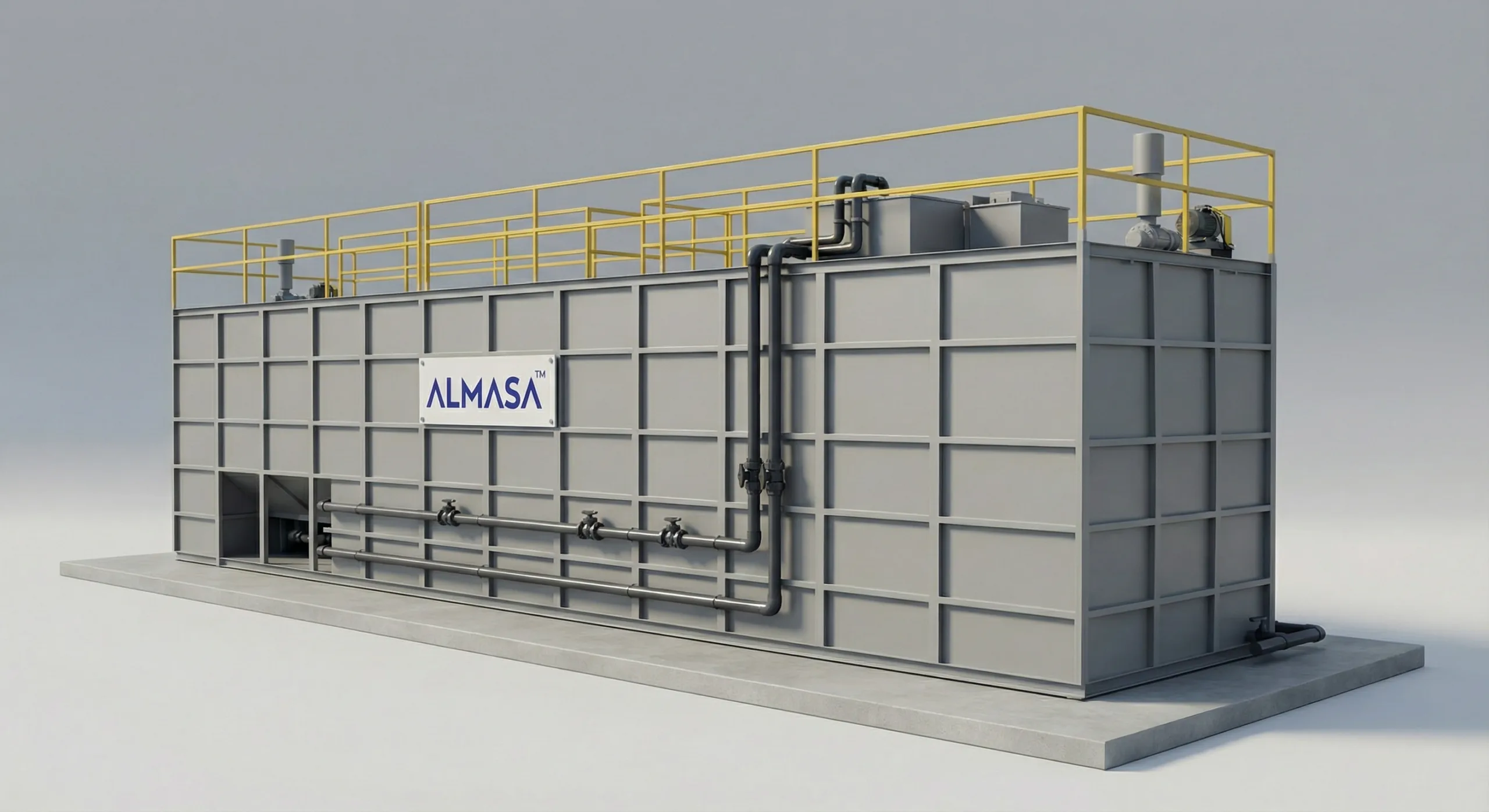
Systems can be supplied as containerised, skid-mounted, modular or permanent civil-built plants depending on the required capacity, site conditions and treated-water objective.
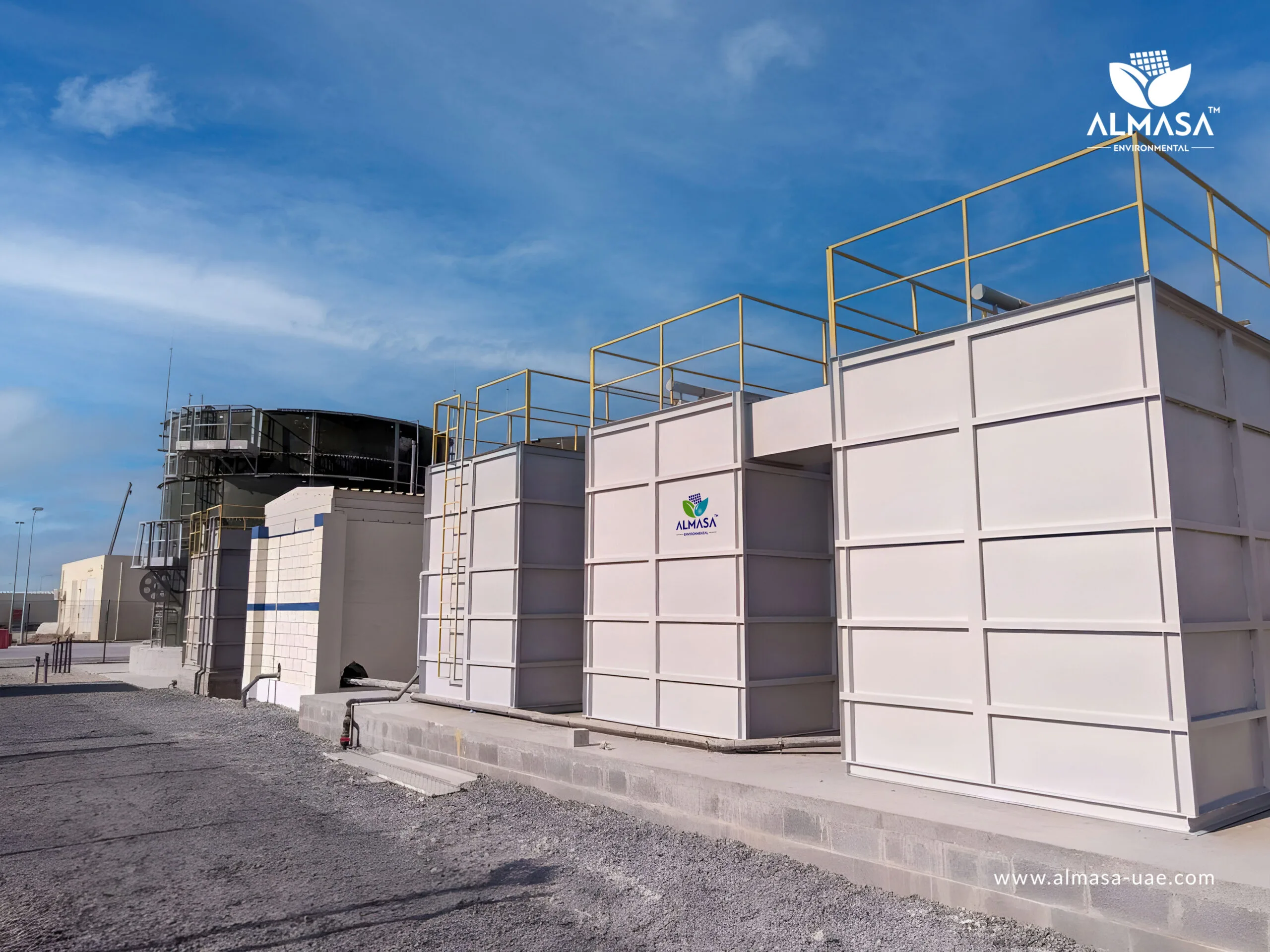
Designed Around Your Labour Accommodation Requirements
Compact Design
Space-saving treatment systems suitable for temporary and permanent worker accommodation facilities.
Treated Water Reuse
Treated wastewater can support approved non-potable uses such as irrigation, toilet flushing and dust suppression.
Modular Expansion
Additional treatment capacity can be integrated when the camp population or wastewater flow increases.
Local Technical Support
UAE-based engineering, installation, commissioning, maintenance and after-sales support.
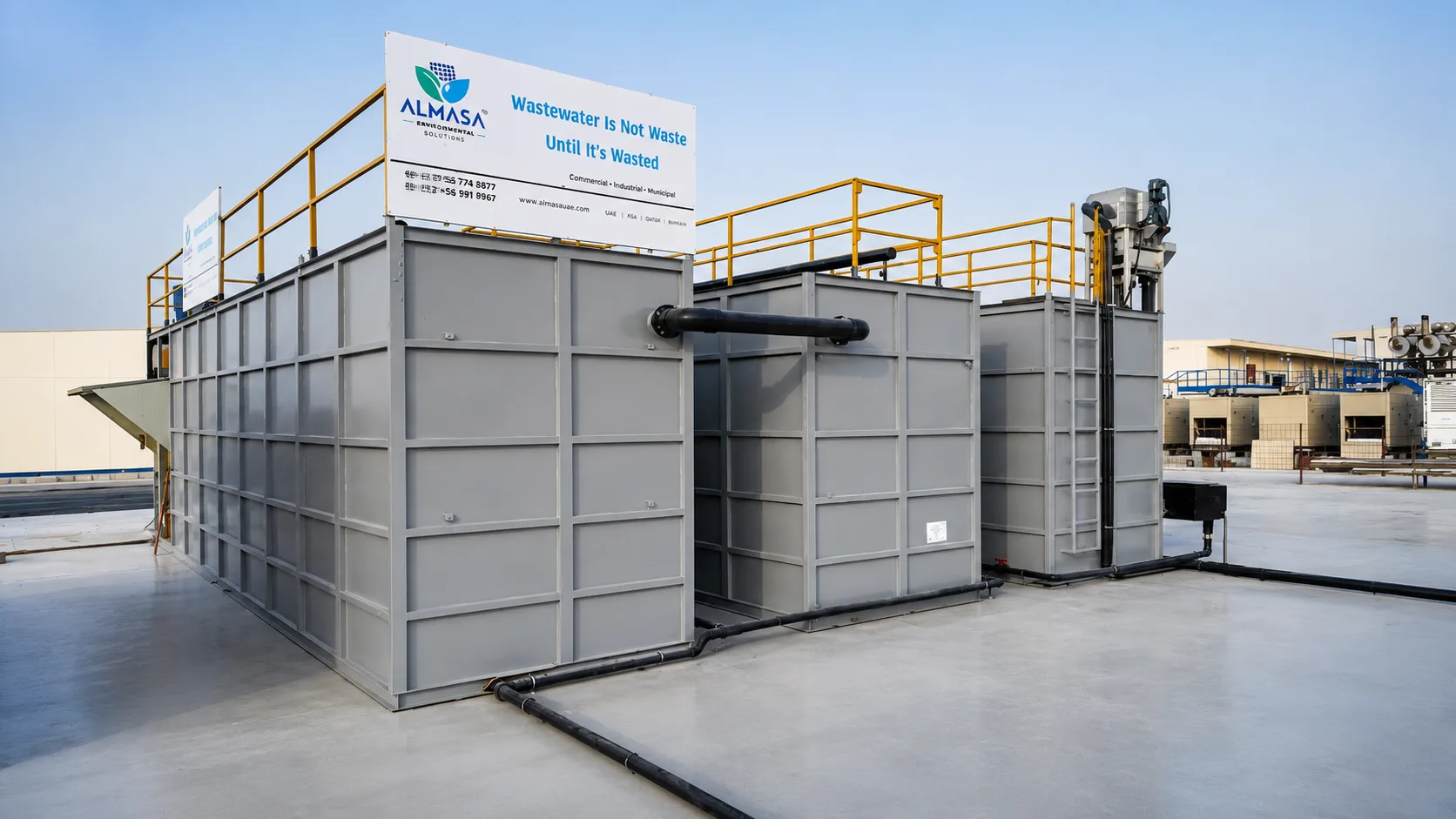
Customised Treatment for Labour Camp Wastewater
A labour camp STP treats wastewater through screening, equalisation, biological treatment, solids separation, disinfection and treated-water storage.
Depending on the required water quality, available space and project duration, Almasa may recommend MBR, MBBR, SBR or another suitable biological treatment process.
How a Labour Camp Sewage Treatment Plant Works
Wastewater Collection
Wastewater is collected from toilets, showers, kitchens, laundries and approved washing areas.
Screening and Grease Removal
Large solids, food particles, oil and grease are removed before biological treatment.
Equalisation
Flow and pollutant concentrations are balanced to protect the downstream treatment process.
Biological Treatment
Microorganisms break down biodegradable organic pollutants under controlled aeration conditions.
Solid–Liquid Separation
Treated water is separated from biological solids using membranes, clarification or another selected process.
Disinfection and Reuse
Treated water is disinfected and stored for an approved discharge route or non-potable reuse application.
MBR Technology for Labour Camps
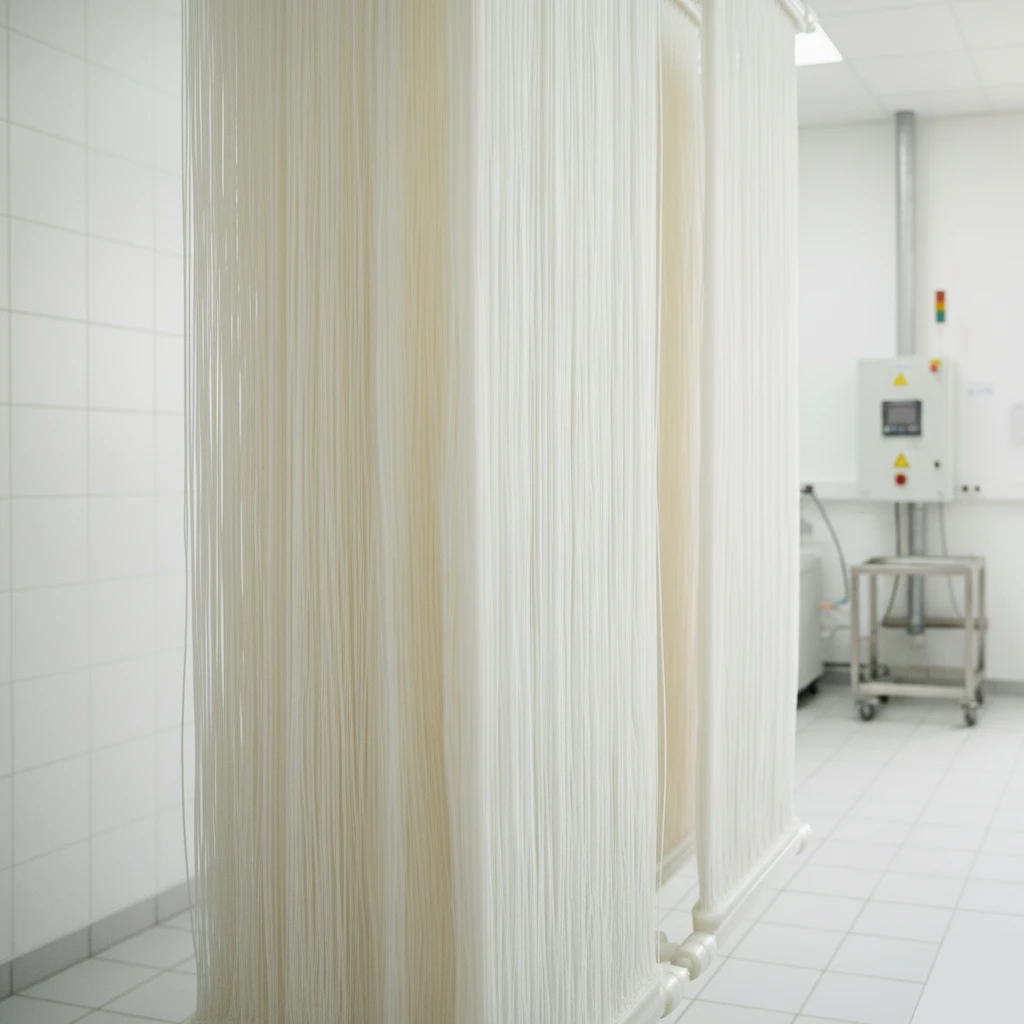
Membrane Bioreactor technology combines biological treatment with membrane filtration to produce high-quality treated water within a compact footprint.
MBR is commonly considered where:
- Available installation space is limited
- High-quality treated water is required
- Water reuse is an important project objective
- A modular treatment system is preferred
- Consistent treatment performance is required
The final technology should still be selected after reviewing wastewater loading, energy requirements, operator capability, maintenance needs and lifecycle cost.
Wastewater Generated in Labour Camps
Labour accommodation wastewater can vary depending on the facilities provided, occupancy pattern and daily water usage.
- Toilets and urinals
- Showers and washbasins
- Ablution facilities
- Kitchens and dining areas
- Laundry rooms
- Floor and common-area washing
Kitchen Wastewater Consideration
Kitchen wastewater may contain oil, grease and food particles. An appropriately sized grease trap and suitable preliminary treatment should be provided before it enters the main biological treatment process.
How Is Labour Camp STP Capacity Calculated?
Treatment capacity should be calculated using actual project conditions instead of relying only on a general litres-per-worker assumption.
- Current and future camp population
- Daily water consumption
- Number of workers and shifts
- Kitchen and laundry usage
- Peak wastewater flow
- Existing wastewater records
- Future expansion requirements
- Required treated-water quality
Almasa reviews the project data before recommending the suitable capacity and treatment process.
Containerised or Civil-Built STP
The correct plant configuration depends on project duration, capacity, available area and relocation requirements.
Containerised and Modular STP
Suitable for temporary labour camps, remote projects, phased developments and facilities that may require future relocation.
- Reduced onsite construction
- Faster installation
- Modular capacity expansion
- Suitable for temporary projects
Civil-Built STP
Suitable for permanent worker accommodation, larger populations and long-term developments with sufficient installation space.
- Suitable for high capacities
- Integrated with site infrastructure
- Long-term operational solution
- Custom civil tank configuration
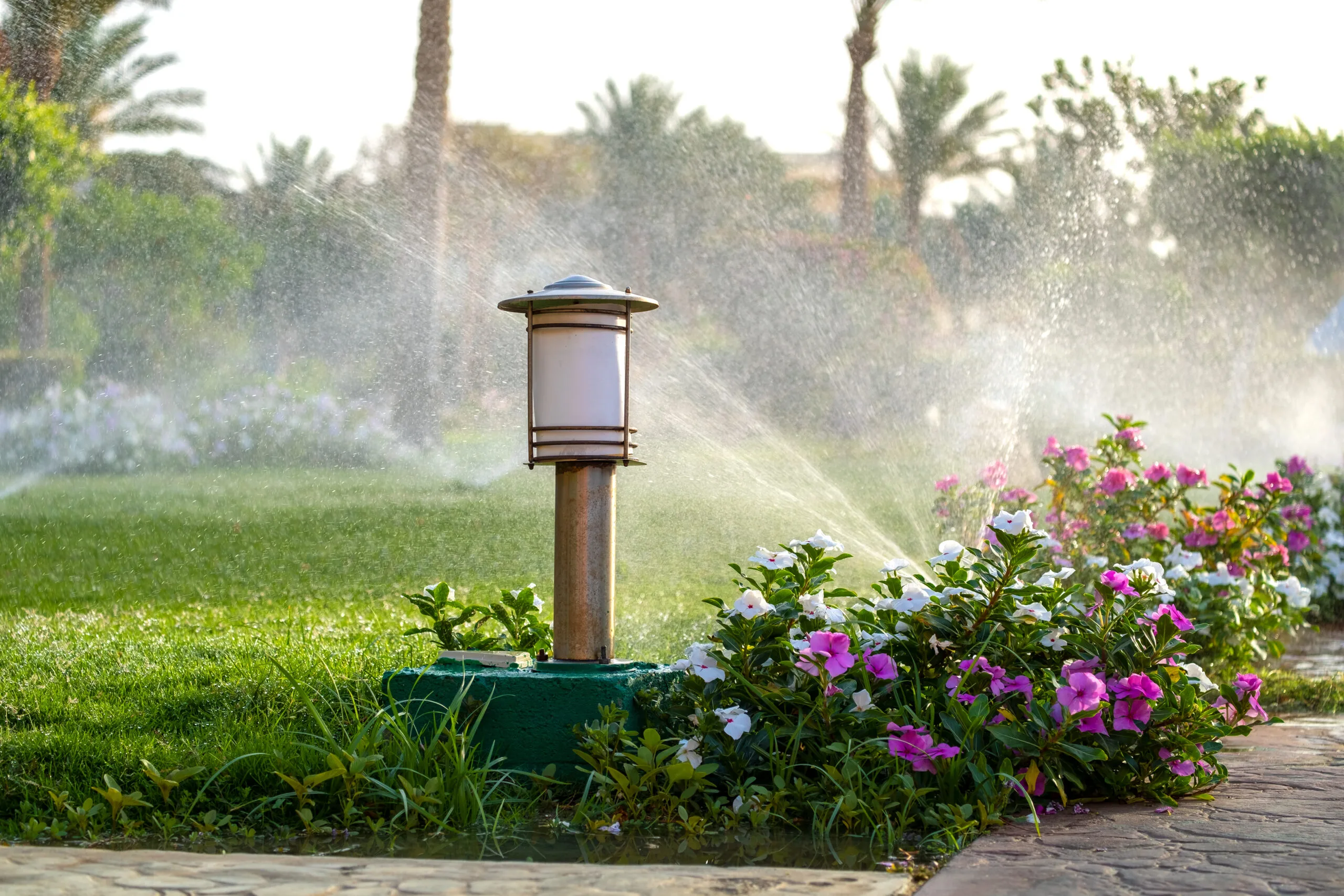
Reuse Treated Labour Camp Wastewater
Subject to the required treated-water quality and authority approval, treated wastewater may be reused for suitable non-potable applications.
- Landscape irrigation
- Toilet flushing
- Dust suppression
- External washing
- Other approved non-potable uses
The proposed reuse application should be confirmed during the design stage because it affects treatment, disinfection, storage and monitoring requirements.
Designed Around UAE Project Requirements
Labour camp wastewater-treatment requirements may vary according to the emirate, municipality, sewerage authority, project consultant and proposed reuse or discharge route.
Authority Requirements
The process is developed around applicable municipality, environmental and sewerage-service requirements.
Outlet Water Target
Treatment and disinfection are selected according to the approved discharge or reuse objective.
Project-Specific Design
Equipment, storage, sludge management and controls are configured according to actual site conditions.
Complete Labour Camp STP Engineering and Support
Almasa provides complete wastewater-treatment support from initial technical assessment through manufacturing, installation, commissioning and after-sales service.
- 600+ completed projects across the GCC
- Locally manufactured MBR systems
- Customised process and mechanical engineering
- Containerised, modular and civil-built plants
- Fast delivery and local technical support
- STP upgrading and capacity expansion
- Annual maintenance and operational support
- Water reuse and recycling solutions
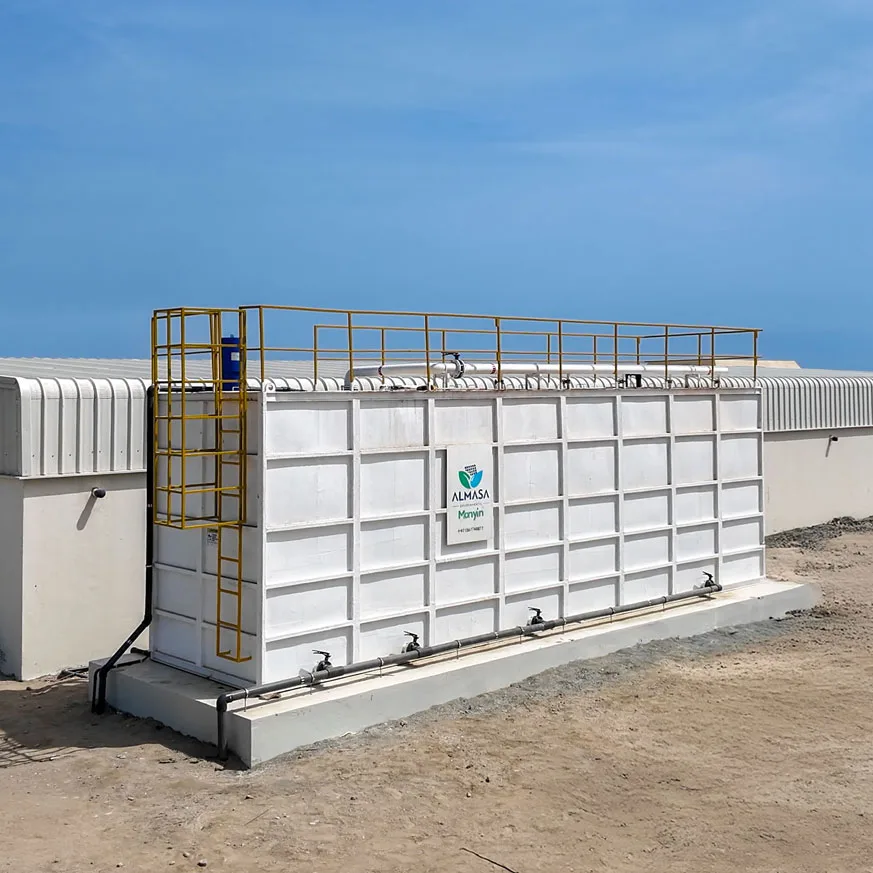
Labour Camp Sewage Treatment Project
Pasco Paving Stones Labour Camp STP
Almasa delivered an MBR sewage treatment solution for a labour accommodation facility associated with Pasco Paving Stones in Al Ain.
Information Required for an Accurate STP Proposal
Providing complete project information allows our engineering team to recommend the correct capacity, process and plant configuration.
- Project location
- Current population
- Future population
- Daily water consumption
- Kitchen information
- Laundry information
- Available installation area
- Required treated-water use
- Temporary or permanent plant
- Consultant specifications
- Site layout or drawings
- Required completion date
