


Hospital Wastewater Treatment UAE Solutions
Custom sewage treatment, stream-segregation and water-reuse solutions for hospitals, clinics, diagnostic centres and healthcare developments.
- Healthcare-specific wastewater assessment
- Compact MBR and modular STP options
- UAE engineering and technical support
Hospital Wastewater Treatment UAE Projects Start with Stream Assessment
Hospital wastewater treatment UAE projects must account for sanitary sewage from patients, visitors and staff together with wastewater from kitchens, laundries, cleaning areas and selected clinical departments. The flow and composition can change with bed occupancy, outpatient activity, operating schedules and the services provided by the facility.
Healthcare drainage cannot be treated as one uniform stream. Laboratory chemicals, pharmaceutical waste, cytotoxic material, radioactive drainage and highly contaminated specialist discharges may require segregation, source control or dedicated management before any connection to the general wastewater system.
Almasa Environmental Solutions designs customised sewage treatment plant systems for new hospitals, healthcare expansions and existing STP and ETP upgrades across the UAE.
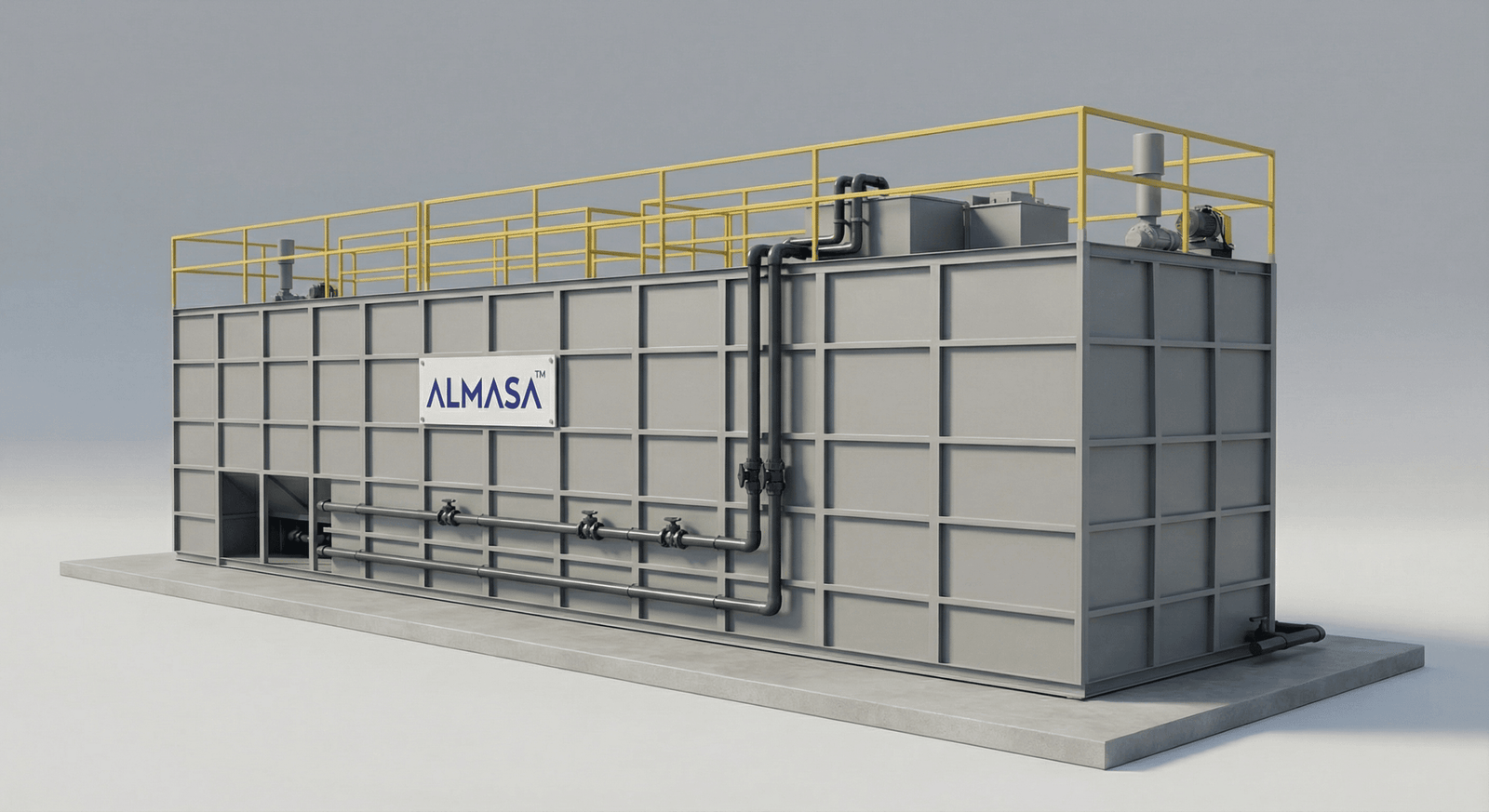
Why Hospital Wastewater Treatment UAE Requires Careful Engineering
A healthcare treatment plant must support continuous facility operation while protecting the biological process from unsuitable discharges.
Critical Daily Operation
Hospitals operate continuously, so redundancy, alarms, standby equipment and maintainable plant layouts require early consideration.
Variable Flow and Loads
Bed occupancy, outpatient visits, shift changes, laundry cycles and cleaning schedules can create significant flow variation.
Separate Drainage Streams
Sanitary, chemical, laboratory and radiation-related drainage should be identified so incompatible streams are not combined blindly.
Controlled Operation
Monitoring, disinfection, chemical dosing, sludge handling and preventive maintenance must remain stable without disrupting care.
Hospital Wastewater Treatment UAE Applications and Sources
Mapping every wastewater source is essential before confirming which streams can enter the main plant and which need source-specific controls.
Patient and Sanitary Areas
Toilets, showers, washbasins, wards, staff facilities and public areas generate sewage broadly comparable to domestic wastewater, but flow depends on facility activity.
Kitchens and Food Services
Food preparation and washing can add grease, suspended solids and organic load. Grease separation and good housekeeping protect downstream treatment.
Laundry and Housekeeping
Detergents, disinfectants, fibres, heat and batch wash cycles can affect hydraulic load, foaming and biological performance.
Laboratories and Diagnostics
Reagents, preservatives, solvents, stains, acids and alkalis require inventory review and may need neutralisation, collection, an effluent treatment process or specialist disposal.
Operating and Clinical Areas
Wash water, cleaning chemicals and selected body-fluid discharges require infection-control and drainage-design review before entering the sanitary system.
Pharmacy, Oncology and Imaging
Unused medicines, cytotoxic products, contrast media and radiation-related drainage require dedicated protocols rather than routine disposal to the STP.
What Can Healthcare Wastewater Contain?
Representative sampling and a departmental wastewater inventory are more reliable than assumptions based only on bed count.
Organic Matter and Solids
BOD, COD, suspended solids, nutrients and sanitary wastewater form the principal load handled by biological treatment.
Pathogens and Indicator Organisms
Microbiological control requires reliable solids removal, disinfection and verification appropriate to the approved outlet.
Detergents and Disinfectants
Concentrated cleaners and disinfectants can inhibit biological treatment when discharged suddenly or at unsuitable concentrations.
Pharmaceutical Residues
Some compounds may pass through conventional treatment. Source control and project-specific advanced treatment may be required.
Chemicals and Extreme pH
Acids, alkalis, metals, solvents and reagents should be identified because they may require neutralisation or off-network disposal.
Grease, Heat and Salinity
Kitchens, laundries, water-treatment reject and specialist equipment can add grease, temperature or dissolved salts to selected streams.
Keep Incompatible Hospital Drainage Streams Separate
Healthcare facilities can have sanitary soil drainage, general wastewater drainage, chemical drainage and specialist radiation-related drainage. The drainage strategy should be coordinated with the healthcare consultant, infection-control team, laboratory team and responsible authorities.
- Map fixtures and departments connected to each drainage network
- Prevent concentrated chemicals from shocking biological treatment
- Provide neutralisation or holding where the approved design requires it
- Keep stormwater out of the treatment system
- Control grease before wastewater reaches equalisation
- Maintain records for specialist waste collection and disposal
Early segregation can reduce treatment risk and prevent the main STP from being oversized to manage streams that should never enter it.
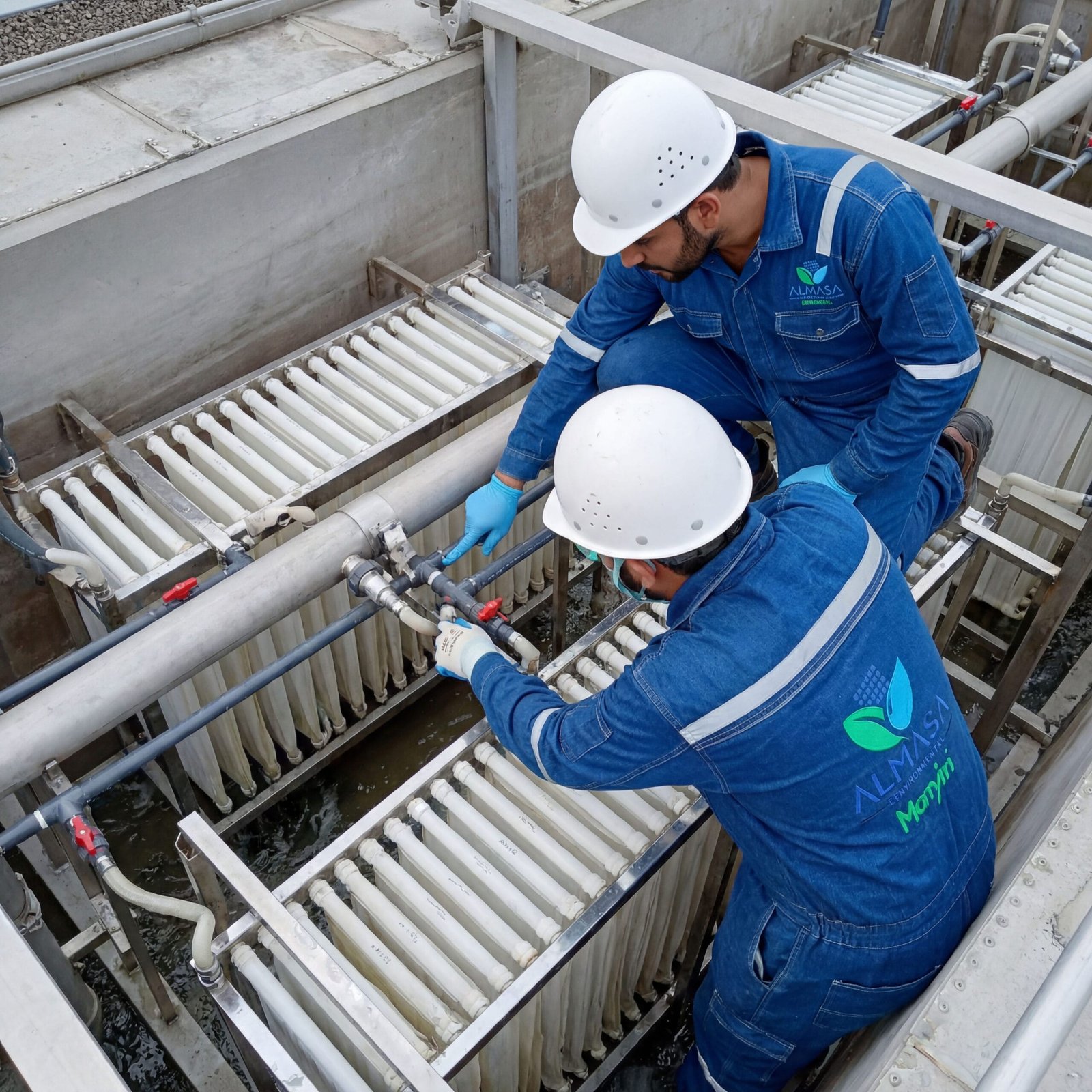
How a Hospital Wastewater Treatment Plant Works
The final process depends on the streams accepted by the plant, influent analysis and the required discharge or reuse quality.
Assessment and Segregation
Confirm departments, drainage routes, prohibited discharges, flow variation, wastewater analysis and the approved outlet criteria.
Screening and Pretreatment
Remove coarse solids and grease while applying source-specific pretreatment to suitable chemical or high-strength streams where approved.
Equalisation
Balance hourly flow, temperature and pollutant strength so downstream biological treatment receives a more stable load.
Biological Treatment
Microorganisms reduce biodegradable organic matter using a selected process such as MBBR, activated sludge, SBR or MBR.
Solids Separation
Clarification or membrane filtration separates biological solids from treated water according to the selected plant technology.
Disinfection and Polishing
UV, chlorination or another approved method controls microorganisms. Additional polishing is selected only when the final use or contaminant profile requires it.
Which Treatment Technology Is Suitable for Hospitals?
MBR
Membrane bioreactor technology combines biological treatment with membrane separation. It suits compact sites and high-quality effluent objectives when accepted influent is biologically treatable.
MBBR
Moving-bed biofilm treatment can provide robust biological performance under changing sanitary loads, followed by clarification and tertiary treatment as required.
SBR
Sequencing batch treatment combines biological stages in timed cycles and may suit projects where batch operation and equalisation are compatible.
Advanced Polishing
Activated carbon, UF, RO, ozone or other processes may be evaluated for defined contaminants or reuse targets; they are not automatic requirements for every hospital.
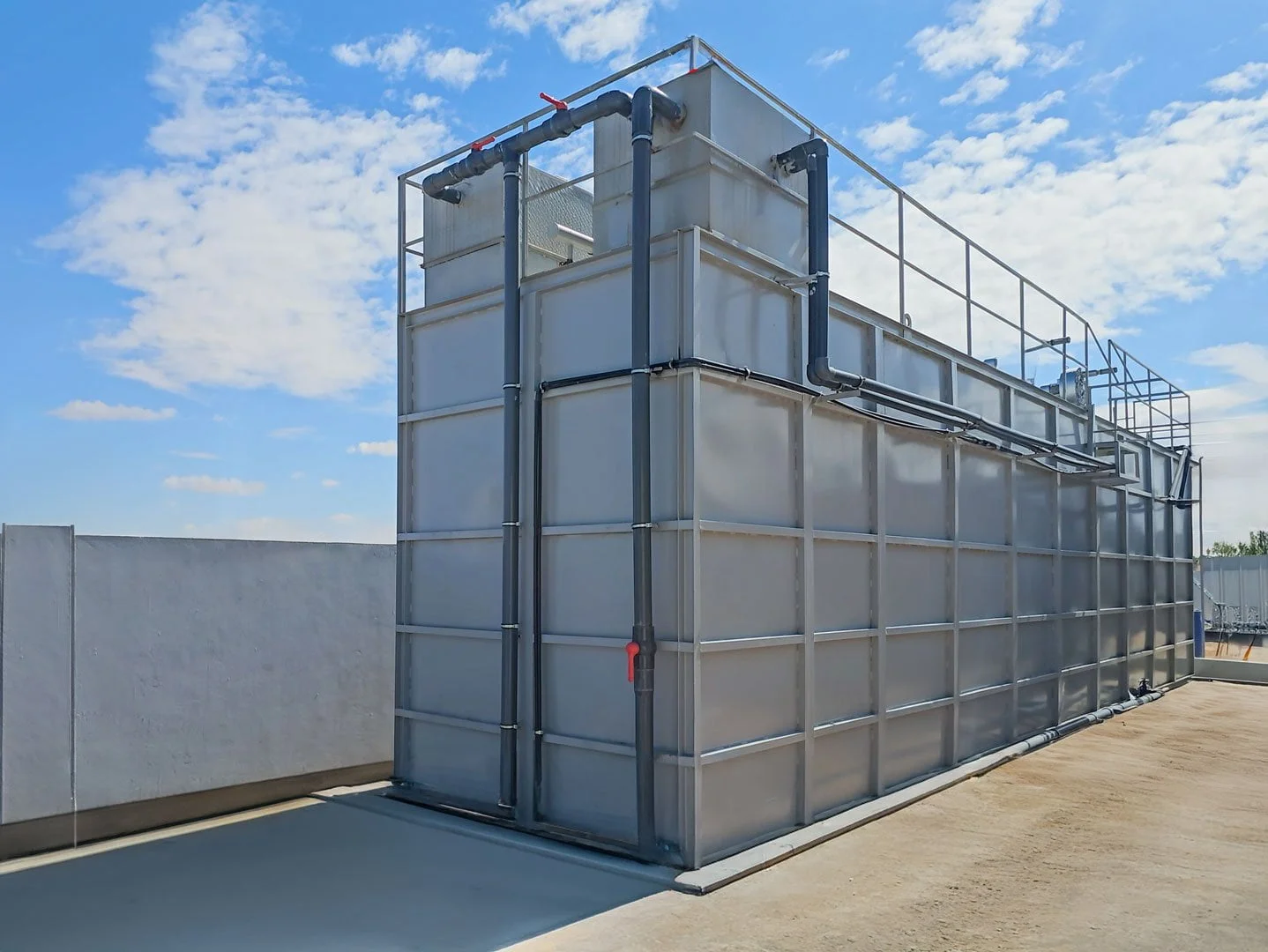
How Is Hospital STP Capacity Calculated?
Bed count is an important planning input, but it is not enough by itself. The design must consider everyone using the facility and all accepted wastewater-producing services.
- Licensed, occupied and future bed numbers
- Inpatients, outpatients, visitors and staff
- Operating theatres and treatment schedules
- Kitchen and food-service demand
- Onsite or outsourced laundry operations
- Cleaning, sterilisation and housekeeping cycles
- Historical water-meter and wastewater-flow data
- Daily, hourly and batch peak flows
- Expansion plans and redundancy requirements
- Approved discharge or treated-water reuse route
Representative flow monitoring and departmental water-use data improve sizing accuracy and help prevent both hydraulic overloading and unnecessary oversizing.
Solutions for New and Existing Healthcare Facilities
Civil-Built Hospital STP
Permanent tanks, equipment rooms, separated drainage and maintenance access can be coordinated with the healthcare design team from the planning stage.
Packaged or Modular STP
Factory-assembled modules can reduce onsite work and suit healthcare projects with limited space, phased demand or shorter installation programmes.
Upgrade and Rehabilitation
Existing tanks may be assessed for capacity, aeration, membranes, disinfection, automation, redundancy and process improvements while managing operational continuity.
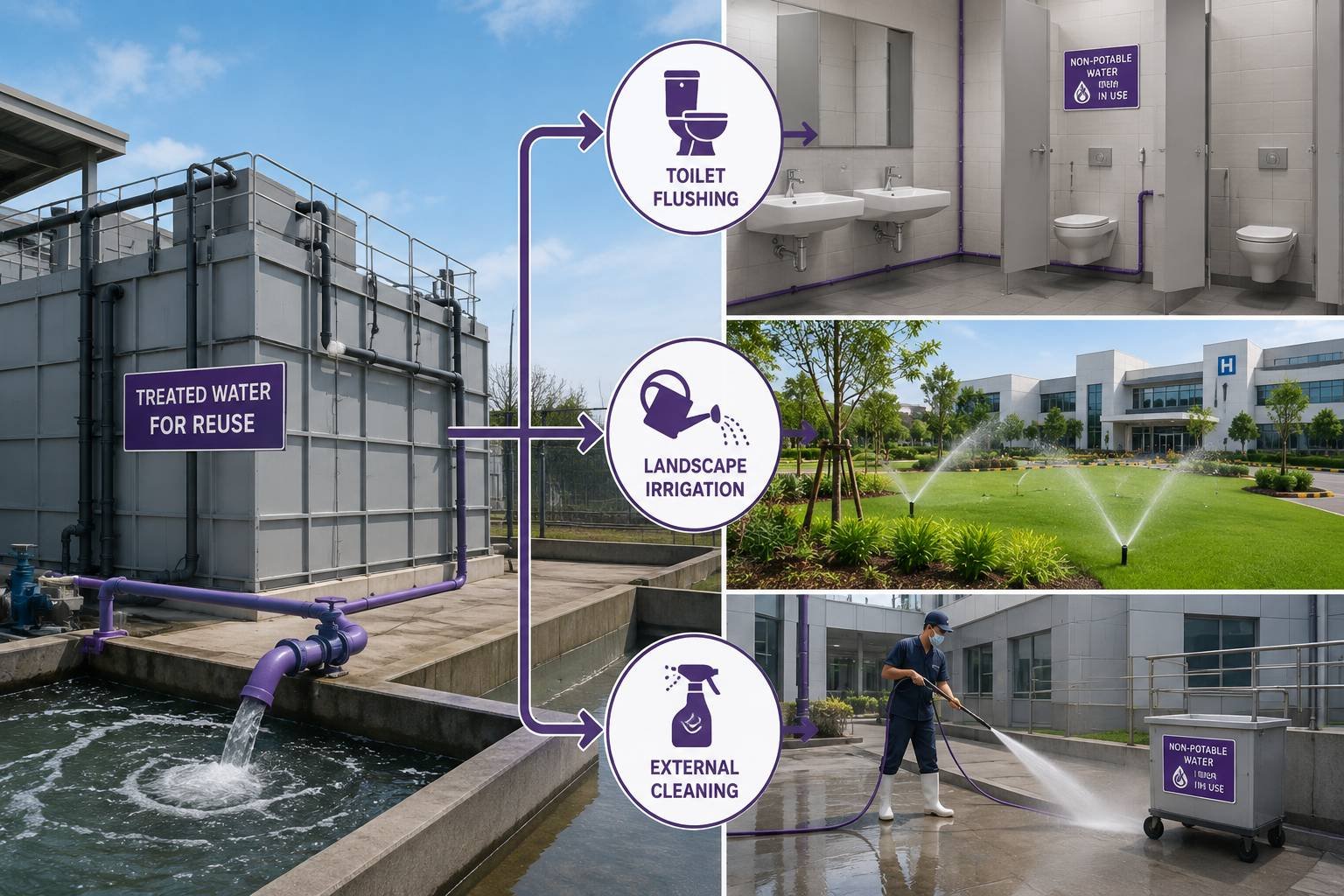
Can Treated Hospital Wastewater Be Reused?
Reuse may be possible for approved non-potable applications when the treatment plant consistently achieves the required quality and the reuse system is accepted by the responsible authorities and project stakeholders.
- Landscape irrigation where specifically approved
- Toilet flushing through a separated reuse network
- External cleaning or other approved non-clinical uses
- Cooling-tower makeup after a separate water-chemistry assessment
Reuse within patient-care, clinical, food-contact or hygiene-critical applications should never be assumed. Storage, residual disinfection, monitoring, cross-connection protection and clear pipe identification form part of the reuse strategy.
Coordinate Healthcare, Drainage and Wastewater Requirements
Hospital wastewater treatment UAE requirements depend on the emirate, healthcare licensing authority, municipality or wastewater operator, development jurisdiction, drainage design, discharge route and proposed reuse application. Project-specific criteria must be confirmed before final treatment design.
Project teams should consult the current Dubai Health Authority Health Facility Guidelines where applicable, together with the requirements of the responsible wastewater and environmental authorities.
Healthcare Design Coordination
Coordinate sanitary, chemical and specialist drainage with the healthcare consultant, infection-control team and relevant facility guidelines.
Wastewater Design Basis
Confirm flow, pollutant loads, prohibited discharges, receiving criteria, monitoring points, redundancy and the approved treated-water destination.
Operational Documentation
Provide process descriptions, drawings, equipment schedules, operating procedures, alarm responses, sampling plans and maintenance requirements.
Reliability Requires More Than Commissioning
A treatment plant must remain stable through occupancy changes, cleaning cycles, equipment maintenance and unexpected influent variation. Operating procedures and trained personnel are essential.
Monitoring, Disinfection and Preventive Maintenance
- Monitor influent flow and key operating parameters
- Control aeration and biological-process conditions
- Verify disinfectant dose or UV performance
- Inspect screens, grease interceptors and equalisation
- Maintain membranes, pumps, blowers and instruments
- Remove and manage sludge through an approved route
- Record alarms, laboratory results and corrective action
- Review departmental chemicals before process changes
Almasa provides annual maintenance and operational support for new and existing wastewater treatment plants.
UAE Wastewater Engineering and Lifecycle Support
Almasa supports healthcare and infrastructure teams from assessment and process selection through manufacturing, installation, commissioning, training and after-sales service.
- 600+ completed projects across the GCC
- Custom design based on accepted wastewater streams
- UAE-manufactured MBR systems
- New STP, retrofit and capacity-upgrade solutions
- Containerised, modular and civil-built options
- PLC, SCADA and alarm-integration options
- Local spare-parts and technical assistance
- Water reuse and advanced polishing integration
- Preventive maintenance and plant optimisation
Information Required for a Hospital STP Proposal
Complete and verified information allows the engineering team to define accepted streams, capacity, treatment stages, redundancy and the project scope accurately.
- Project location and responsible authorities
- Healthcare facility type and departments
- Licensed, occupied and future beds
- Daily inpatient and outpatient numbers
- Visitor and employee numbers
- Operating-theatre and clinical schedules
- Laboratory and diagnostic activities
- Pharmacy, oncology and imaging services
- Kitchen and food-service details
- Onsite laundry and cleaning schedules
- Drainage-stream drawings and segregation
- Average, peak and batch wastewater flows
- Representative laboratory analysis
- Chemical and disinfectant inventory
- Existing plant and tank information
- Available plot, access and utility details
- Required discharge or reuse criteria
- Redundancy and continuity requirements
- Future expansion plans
- Required completion date
